
Black Friday Strategy Guide


01
Why most Black Friday campaigns underperform
“We're not making much profit and it costs too much to get customers.”
I hear versions of that from ecommerce businesses all the time. Then Black Friday arrives and many of those same businesses do two things at once. They decide to jump on the BFCM gravy train, give away more margin and spend more money acquiring customers.
They have their biggest sales day of the year, revenue goes up and everyone talks about how much Black Friday has grown.
Then you look at what the business actually made and realise the numbers don’t add up.
.png)
Revenue went up, Margin went down.
Revenue is usually the first number everyone looks at during Black Friday.
It's easy to understand why. It's immediate, it's visible and if you've had your biggest sales day ever, it feels like something worth celebrating.
But revenue doesn't tell you what you had to give away to generate it.
A 20% discount doesn't mean you've made 20% less profit on an order. Depending on the underlying margin, the impact can be significantly greater. Then there's the cost of generating the additional demand.
If you're increasing media spend at the same time as reducing what you make from each order, during a period when ad inventory is at its most expensive, the campaign has more work to do before it creates additional value for the business.
That's how you can end up with your best ever revenue figures, but less cash in your pocket.
It doesn't mean discounting is inherently a bad idea. It means the additional demand needs to be worth more than the margin and acquisition cost you've invested in creating it.
That's very different from simply asking whether Black Friday revenue went up.

Discounting customers who were going to buy anyway
The economics get even more difficult when you consider where those sales would have come from without the promotion. Not every Black Friday order exists because of Black Friday.
Some customers were already going to buy, some were already in-market, some may simply have moved forward with a purchase they would have made a couple of weeks later.
When you apply a blanket discount, you're not only giving it to the incremental customers the promotion creates. You're also giving it to customers who may have happily paid full price.
That's margin you've given away without necessarily creating a sale you wouldn't otherwise have had.
The important question isn't how much revenue the promotion generated. It's how much additional demand it created.

An offer that isn't really an offer
There's an opposite problem too. Assuming any offer becomes a Black Friday offer simply because it's running over Black Friday. In trying to protect margin, the promotion can end up not being compelling enough to change customer behaviour.
If I can visit your website in July and get 10% off for signing up to your emails, a 15% Black Friday discount probably doesn't feel particularly special.
That's where Black Friday has changed. An event synonymous with exceptional deals has, in many cases, become another fairly standard promotional period.
Take a fairly normal discount, put Black Friday on the creative, add a countdown timer and expect a significant change in demand.
But if customers regularly see similar offers from you throughout the year, there's nothing particularly compelling about that proposition.
If the Black Friday offer isn't meaningfully better than the incentive you use to collect an email address all year, why should somebody treat it like an event?
That doesn't mean the answer is automatically a bigger discount. A stronger proposition could come from bundles, gifts, exclusivity, early access, added value, limited products or something else that gives customers a genuine reason to act.
The point is that the offer has to be strong enough to change behaviour and that's something you want to find out before November, not during it.

Planning that starts too late to change anything
I've worked with brands that haven't finalised their Black Friday offer until November. In one case, we received the Black Friday creative at 3pm on Black Friday itself. At that point, any chance of success had long gone. We'd missed the three-week run-in and even the peak of Black Friday demand itself.
But late creative is usually a symptom rather than the actual problem. If the offer is agreed late, there's less time to test whether customers respond to it.
If priority products are decided late, there's less time to improve the pages you're going to send traffic towards.
If creative is briefed late, there's less opportunity to learn which messages and formats work before demand peaks.
If stock, margin and fulfilment haven't been considered, marketing can end up successfully generating demand the business doesn't particularly want or can't comfortably serve.
If all of that is still being decided in November, there's very little room left to change course.
Black Friday performance is often determined by decisions made weeks before Black Friday arrives. That's why Black Friday planning needs to start with much more than which ads you're going to run.
Judging the result on the day rather than the quarter
Then comes the final problem. Deciding whether Black Friday worked by looking at Black Friday.
Imagine you've just had your biggest Black Friday ever. Orders are up. Revenue is up. All the numbers look great.
Was it successful? You don't know yet.
Some customers may simply have brought forward purchases they would otherwise have made in December. Some of the revenue will disappear through returns. Some customers acquired at significant cost may never buy again.
Black Friday can grow without the peak trading period growing with it.
That's why the commercially useful question isn't whether this Black Friday beat the last one. It's whether the business created more value across the whole period.
- What happened to gross profit or contribution?
- What did it cost to acquire the additional demand?
- What happened to December?
- How did the return rate change?
- What happened to the customers you acquired?
You won’t have all of those answers on Cyber Monday.
Black Friday doesn't underperform simply when sales are low. It can underperform while producing the biggest revenue number you've ever seen. The aim isn't to make Black Friday look bigger. It's to make the whole peak period more commercially valuable.
02
Deciding what black friday is actually for
Over the last 20 years, Black Friday has gone from an event you watch on the news in bemusement with Americans fighting over TVs in Shopping Centres at midnight to the jewel in the UK Christmas retail season.
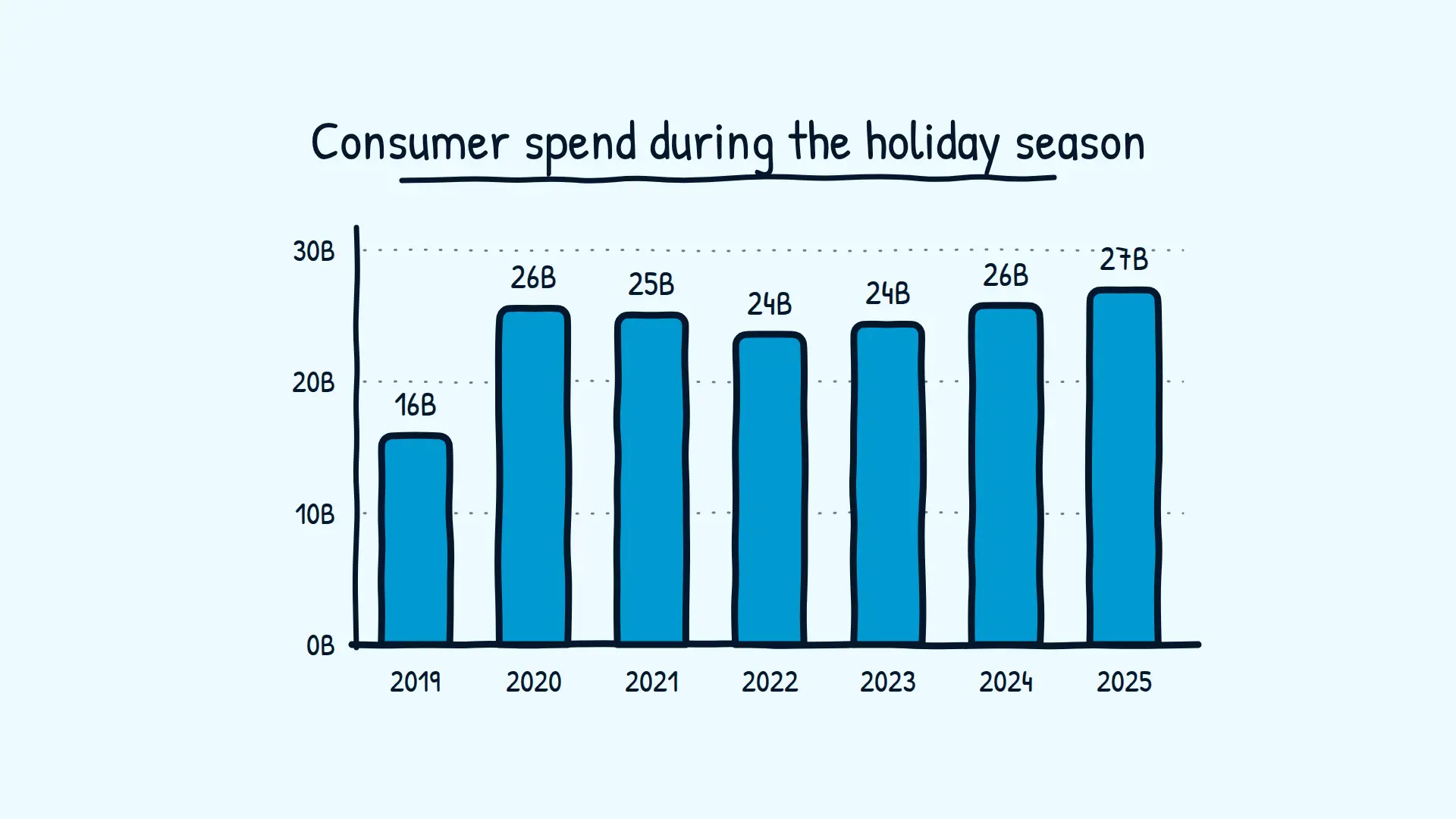
Last year saw UK consumers spend just under £3.8bn online over the Black Friday & Cyber Monday (BFCM) weekend, with consumers spending nearly £27bn during the holiday season.
.webp)
Should my brand get involved with Black Friday?
This might sound like a stupid question, but it should be the first and most important question to ask yourself before you go any further.
The increase in consumer demand and the accessibility provided by ecommerce has made BFCM a real dilemma for brands. On the one hand this is the peak season for consumer demand where you expect to make your most sales all year. On the other hand, consumer expectations for high discounts eat into ever reducing profit margins. Get it wrong and it’s a recipe for burning cash and brand reputation.
BFCM artificially brings the Christmas demand forward a couple of weeks and for brands the risk is that you don’t get involved and the demand doesn’t come back in time for Christmas.
This increase in demand with more brands taking part has also led to an increase in costs on advertising platforms, further eating into profit margins.
So when it comes to deciding whether to take part in BFCM, the first question should be: what do you actually want to get out of it?
You might want to acquire new customers, maximise short-term commercial return, clear ageing stock or reward existing customers.
All are perfectly valid reasons to take part. But deciding to participate isn't a strategy. You still need to decide what you're going to optimise for.

Four Black Friday campaigns most brands run at once without noticing
Most brands go into the period trying to do several things at once. They want record revenue, but they don't want to sacrifice margin. They want thousands of new customers, but don't want acquisition costs to increase. They want to shift old stock, but don't want to cheapen the brand.
These are all perfectly reasonable ambitions. The problem is that they require different decisions.
A Black Friday campaign designed to acquire as many new customers as possible shouldn't necessarily look like one designed to maximise profit. And neither should look like a campaign designed to clear old stock you don't want to be holding in January.
Yet it's surprisingly common for all of these objectives to get bundled into the same promotion, with the same discount, the same media plan and the same measurement.
Then, when the weekend is over, everyone looks at revenue and ROAS and tries to decide whether Black Friday was a success.
The answer depends entirely on what you wanted it to do in the first place.

Volume, margin, new customers or clearance. Pick one.
There are four fundamentally different ways you can optimise a Black Friday campaign.
Volume
The objective is simple: sell as much as possible.
You're trying to maximise orders or revenue during the period, even if the efficiency of each additional sale starts to fall. The bet is that the additional contribution generated through greater volume outweighs the deterioration in efficiency required to get there.
That might mean a stronger offer, significantly higher advertising spend and pushing further into audiences that wouldn't normally meet your efficiency targets.
Margin
Black Friday is an opportunity to benefit from increased consumer demand without giving all of that value back through discounts and advertising costs.
The question isn't how much revenue you can generate. It's how much incremental contribution you can generate.
That might mean shallower discounts, excluding certain products, being more disciplined with paid media and accepting that you won't generate the biggest possible revenue number. All underpinned by focusing on products with a higher commercial opportunity.
New customers
Here, the discount is effectively part of your acquisition cost.
You're deliberately sacrificing some first-order margin to bring more people into the customer base, because you believe enough of those customers will purchase again to make the economics work.
That changes the question from "Was the first order profitable?" to "Were these customers worth acquiring?"
And that requires you to understand what happens to Black Friday customers after Black Friday.
Clearance
Sometimes the objective really is to shift stock.
If you've got excess inventory, seasonal products or lines you're planning to discontinue, Black Friday can be an opportunity to turn that stock into cash.
In that scenario, comparing the campaign against your normal margin targets misses the point. The relevant comparison is what happens if you don't sell it? Storage costs, tied-up working capital, further markdowns or potentially writing the stock off altogether.
All four strategies can make commercial sense. Trying to optimise for all four at the same time is where things get messy.
Of course, you're going to care about all four. But one needs to take priority because eventually they will come into conflict.
The question to answer is “when they do, which one wins?”.

What that choice changes about everything downstream
Once you've decided what Black Friday is actually for, a surprising number of other decisions become easier.
Your offer changes. A business prioritising margin probably shouldn't run the same discount structure as one trying to liquidate stock.
Your product selection changes. Clearance might focus heavily on particular SKUs, whereas a new customer acquisition campaign might lead with the products most likely to create valuable repeat customers.
Your audience changes. An acquisition strategy requires reaching people who haven't bought from you before. A customer-reward strategy will do the opposite and give your best customers first or exclusive access.
Your media strategy changes. If you're maximising volume, you might deliberately tolerate higher marginal acquisition costs as you increase spend. If you're protecting margin, there should be a point where you stop buying increasingly expensive demand.
And, crucially, your measurement changes. If the objective is volume, revenue and order growth matter. If it's margin, contribution matters. If it's acquisition, new-customer CAC, first-order contribution and subsequent customer value matter. If it's clearance, stock reduction, cash recovery and the economics of the inventory you're no longer holding matter.
That's why asking "What ROAS did we get from Black Friday?" isn't particularly useful on its own.
You can have a fantastic ROAS and fail to acquire meaningful numbers of new customers. You can have record revenue and make less profit. You can report terrible margins while running an extremely successful stock-clearance campaign.
There isn't one definition of a successful Black Friday. There is only success against the job you decided Black Friday needed to do.
03
What the discount actually costs you
Discounting is one of the simplest levers a business can pull to increase sales. Reduce the price, improve the value of the offer and in most cases, more people will buy.
The difficult part is working out how many more people need to buy before the discount was actually worth giving away in the first place. It’s not quite as straightforward as if you reduce your prices by 20%, you need 20% more orders to make the same amount of money.
Depending on your margins, you might need 50% more. You might need 100% more.
And that's before you consider how many of those customers would have bought from you at full price anyway, or how much you had to spend to generate the additional demand.
So before deciding whether an offer should be 10%, 20% or 30% off, there's a more important question to answer, “What does the discount actually need to achieve to pay for itself?”
The margin on a discounted order
Let's start with a £100 product with a 40% gross margin. At full price, the numbers look like this:
- Selling price: £100
- Cost of goods: £60
- Gross profit: £40
Now take 20% off.
The customer pays £80, but the product still costs you £60.
- Selling price: £80
- Cost of goods: £60
- Gross profit: £20
So you've reduced the selling price by 20%, but you've reduced your gross profit from each order by 50%.
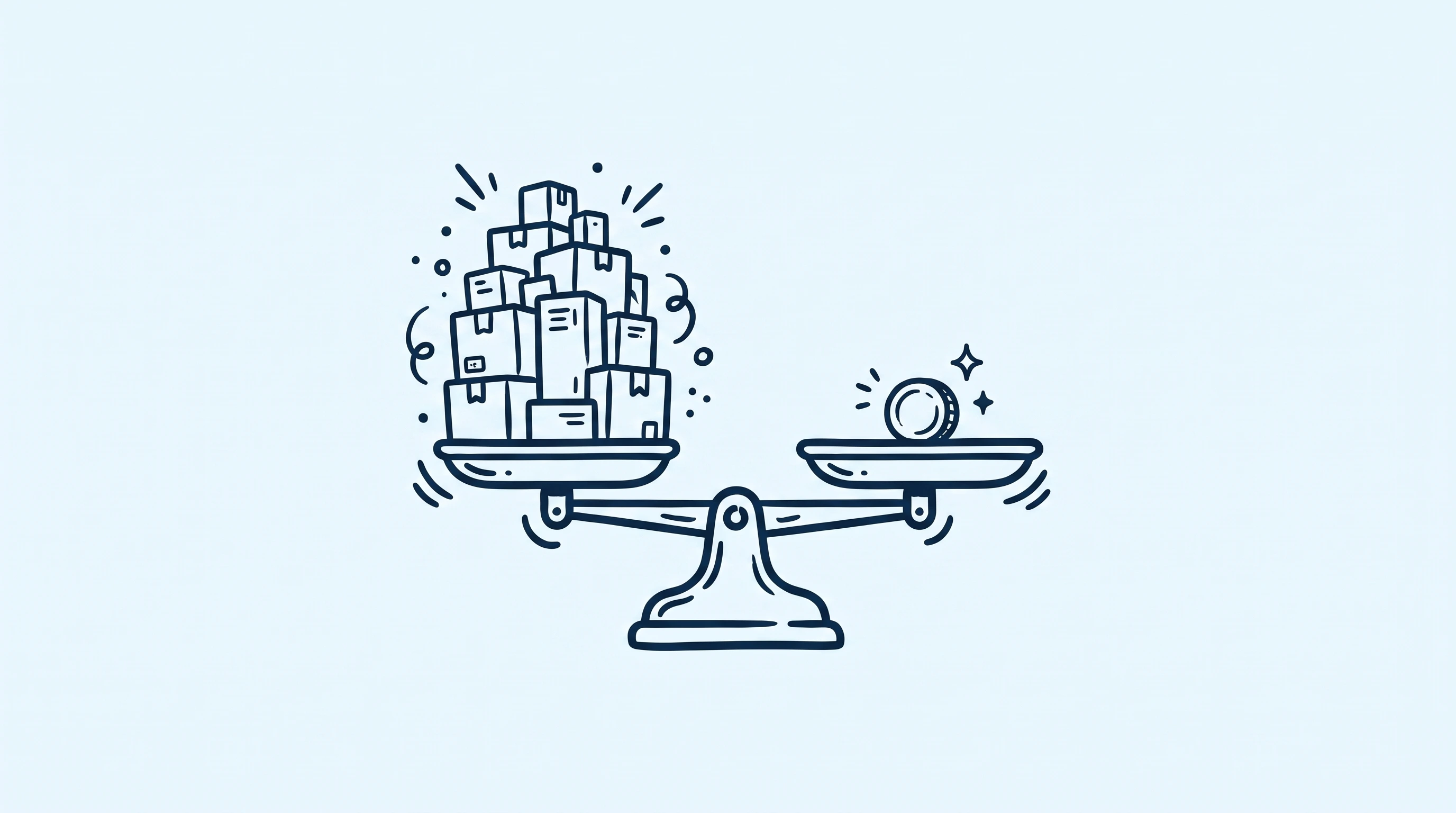
You now need to sell twice as many products to generate the same £40 of gross profit. It doesn't stop there, as the impact of the discount changes significantly depending on the margin you started with.
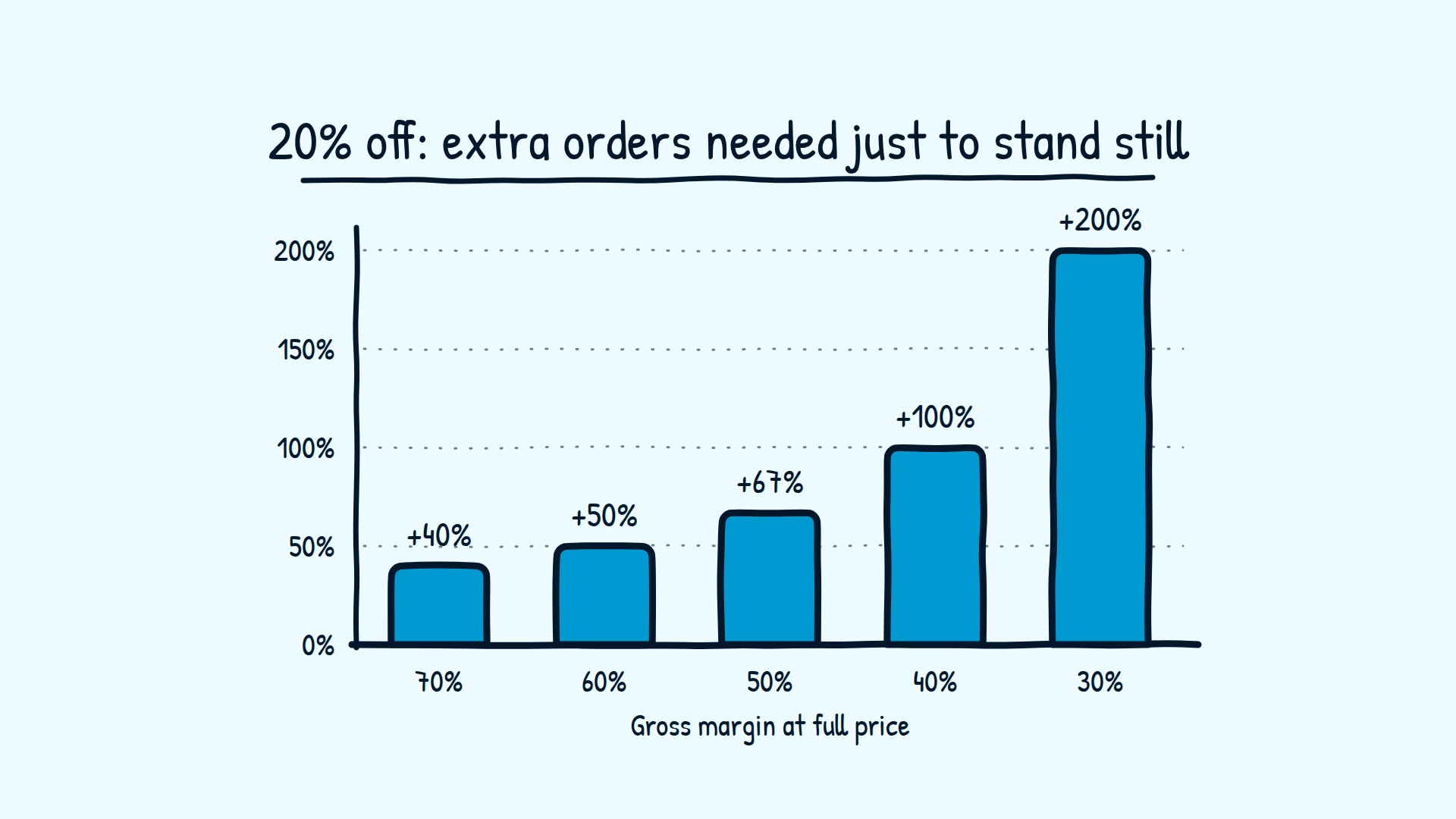
So asking "How much should we discount?" without understanding the margin underneath the products you're discounting is starting in the wrong place.
Instead the better question to ask is “How much additional demand does this discount need to create before we're better off for offering it?”.
What does that look like for a £5m brand?
Let's take a fictional ecommerce business generating £5m a year, with an average order value of £100 and a 60% gross margin.
Based on previous trading, it expects to generate 10,000 orders during a key promotional period without discounting. At full price, that's £1m revenue and £600,000 gross profit.
Now they introduce a 20% off promotion.
Those same 10,000 orders generate £800,000 revenue and £400,000 gross profit. Before the promotion has generated a single additional order, the business has given away £200,000 of gross profit to customers it expected to buy anyway. To get back to the £600,000 baseline, it now needs to sell 15,000 orders. That's 50% more orders just to stand still.
Now imagine the promotion generates 16,000 orders.
On the surface, it looks fantastic:
- Orders: +60%
- Revenue: +28%
- Gross profit: +6.7%
A 60% increase in Orders has produced less than 7% more gross profit.
And even that isn't the final answer, because we haven’t yet factored in what it costs to generate those orders.
What an additional order is actually worth
To understand what the promotion actually generated, you need to account for the variable costs attached to those additional orders:
Net selling price − cost of goods − fulfilment − payment fees − returns/refunds − variable acquisition cost = contribution
Exactly which costs belong here will differ by business, but the principle doesn't.
A discount reduces the amount available to acquire an order at exactly the point where you need to generate significantly more orders for the promotion to work.
Go back to our original £100 product with a 40% gross margin. At full price, it generates £40 gross profit. If the business wants to retain £20 after acquisition, it can afford to spend up to £20 acquiring the order.
At 20% off, gross profit falls to £20. If the business still wants to retain £20, there's now nothing left to acquire the customer.
Something has to give. Either the discount, acquisition cost, required contribution, basket value or the amount of future customer value you’re prepared to factor in.
None of this means discounting is a bad strategy. A promotion that creates enough genuinely incremental demand, attracts valuable new customers, increases basket size or helps move stock can be hugely profitable. The point is to understand what needs to happen for the economics to work before deciding how much you're prepared to give away.

Set the floor before anyone builds the campaign
That's why the commercial conversation needs to happen before the marketing one.
Before anyone decides the discount, briefs creative or sets a media budget, establish the minimum economics you're prepared to accept. That might be a minimum contribution per order. For acquisition, you might accept less first-order contribution because you understand subsequent customer value. For clearance, recovering cash from unwanted stock might justify much lower margins.
There isn't one universal floor. The important thing is deciding yours before the campaign starts. Otherwise the campaign effectively decides it for you.

The calculation is different for lead generation
For an ecommerce business, there's a relatively direct relationship between an order, its selling price and the costs attached to fulfilling it. Lead generation businesses have a different problem because the conversion recorded by the advertising platform isn't the commercial outcome.
Imagine 1,000 leads normally produce 200 qualified opportunities and 50 customers. At £2,000 revenue per customer and a 50% contribution margin, those leads ultimately represent £50,000 of contribution.
Now imagine a promotion offer dramatically increases response to 1,500 leads. On the surface, that's a fantastic result with 50% more leads. But suppose the additional volume changes the quality of the people coming through. Only 15% now become qualified, so 1,500 × 15% = 225 opportunities and only 20% of those become customers. Now 225 × 20% = 45 customers. Lead volume has increased 50%, but customer volume has fallen 10%.
The campaign could even report a lower cost per lead while producing a worse commercial outcome. Unfortunately I see this regularly in lead generation businesses that become hyper-focused on generating more leads.
That's why the equivalent of gross margin for lead generation isn't simply CPL. You need to understand the relationship between the thing you're buying at the top of the funnel and the commercial value that eventually comes out of the bottom.
Depending on the business, that could mean looking at qualified-lead rate, lead-to-sale rate, revenue per lead, contribution per lead or the eventual lifetime value of customers acquired during the promotion.
The principle, however, is exactly the same - More conversions don't automatically mean more value.

Work backwards, not forwards
It's tempting to start your promotion planning with the offer.
Should we do 10% or 20%?
That's backwards. Start with the economics.
Understand what you make from a full-price order. Decide what you're prepared to make from an incremental order. Estimate how much demand you'd receive without discounting and what you're prepared to spend acquiring the additional demand.
Only then can you work out how aggressive you can afford to make the offer.
Because ultimately, the question isn't whether the discount generates more sales. It's whether the value created by those additional sales outweighs the margin you've invested in generating them.
04
Black friday is one week of a ten week trading period
Black Friday has become so dominant in the retail calendar that it's easy to treat it as the main event.
Budgets are built around it. Promotions are planned around it. Creative calendars count backwards from it. And when Cyber Monday finishes, everyone wants to know whether it worked.
The problem is that Black Friday doesn't happen in isolation.
Demand starts building before it. Some customers delay purchases in anticipation of a deal. Others bring forward purchases they would otherwise have made in December. Christmas gifting continues after the promotions finish and eventually, a proportion of everything you've sold comes back as a return.
So while Black Friday will probably give you some of your biggest individual trading days of the year, judging its success as a four-day event gives you a very incomplete picture and minimises your potential impact.
Peak isn't ten weeks of continually increasing demand. It's a longer commercial period with different jobs at different stages.

The peak calendar
Consumer demand doesn't suddenly appear on Black Friday morning. It builds over time.
STOQ analysed more than 500,000 preorders across Shopify stores between September 2025 and January 2026. While preorder behaviour won't perfectly mirror ecommerce sales as a whole, the data gives us a useful view of how demand develops across the peak period.
By the final week of October, weekly preorder demand was already more than 70% above the September average, almost a month before Black Friday.
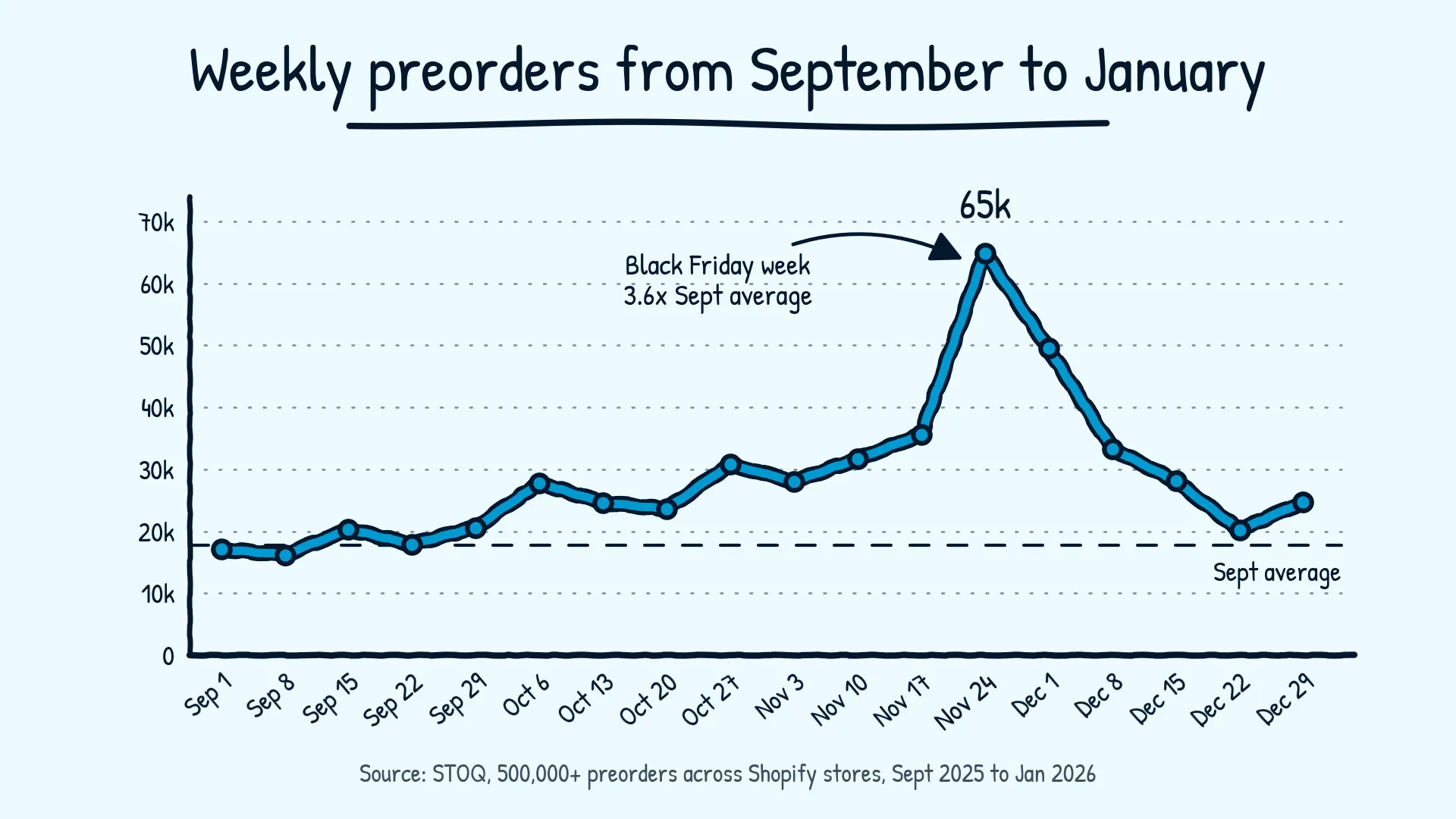
The important point isn't the precise uplift. It's the shape of the demand curve and it's a pattern we see in actual ecommerce sales too.
Looking across our own Shopify client data over multiple peak periods, the broader pattern is similar. Demand begins building through October, accelerates sharply through November and reaches its highest point around the Black Friday period. Revenue then falls away from that peak through December, but doesn't disappear once Cyber Monday finishes. There's still a significant period of Christmas trading to capture.
Black Friday isn't the beginning of peak demand. It's the highest point on a much longer demand curve.
That's why I'd think about peak as a series of phases rather than a single event.

September and early October: build demand
For many customers, the journey starts well before they're ready to buy or thinking about Black Friday.
They're discovering products, researching options and being exposed to brands that might eventually make their shortlist.
The commercial value of this period isn't necessarily going to show up in immediate conversion rates. Its job is to create and influence the pool of demand that becomes more valuable as purchase intent increases.
That doesn't mean blindly spending more because Black Friday is coming. It means recognising that by the time demand reaches its peak, a lot of the consideration that influences where people eventually buy has already happened.

Late October and November: demand accelerates
As Black Friday gets closer, behaviour starts to change.
Research becomes more active. Customers start looking for promotions. Some purchases are delayed because consumers expect prices to fall or hope there will be a stronger promo offer closer to BFCM, while other customers start their Christmas shopping.
Black Friday then concentrates a significant amount of that demand into a very short period.
That makes it incredibly important. It doesn't make everything either side of it irrelevant.

December: demand falls, but value remains
Once Cyber Monday passes, demand starts to fall away from its peak. But lower demand doesn't mean December becomes commercially unimportant.
We've seen this directly in our own client data. In one Christmas campaign, Black Friday was the single biggest sales day but accounted for just 7% of revenue across the campaign period.
Black Friday through Cyber Monday accounted for 15%. The period after Cyber Monday through to the last postage date for Christmas generated 35% of revenue — and did it at a higher margin than BFCM.
That's a really important consideration. The point of highest demand isn't necessarily the period that creates the most value.
Yes, Black Friday gives you volume, but you're also discounting more heavily and competing for customers during one of the most expensive acquisition periods of the year.
Once Black Friday is over, the reason to buy starts to change. The promotional deadline disappears, but it's replaced by another one; getting the right present in time for Christmas.
That means there can still be high-intent demand to capture in December without necessarily maintaining the same level of discount.
What Black Friday borrows from December
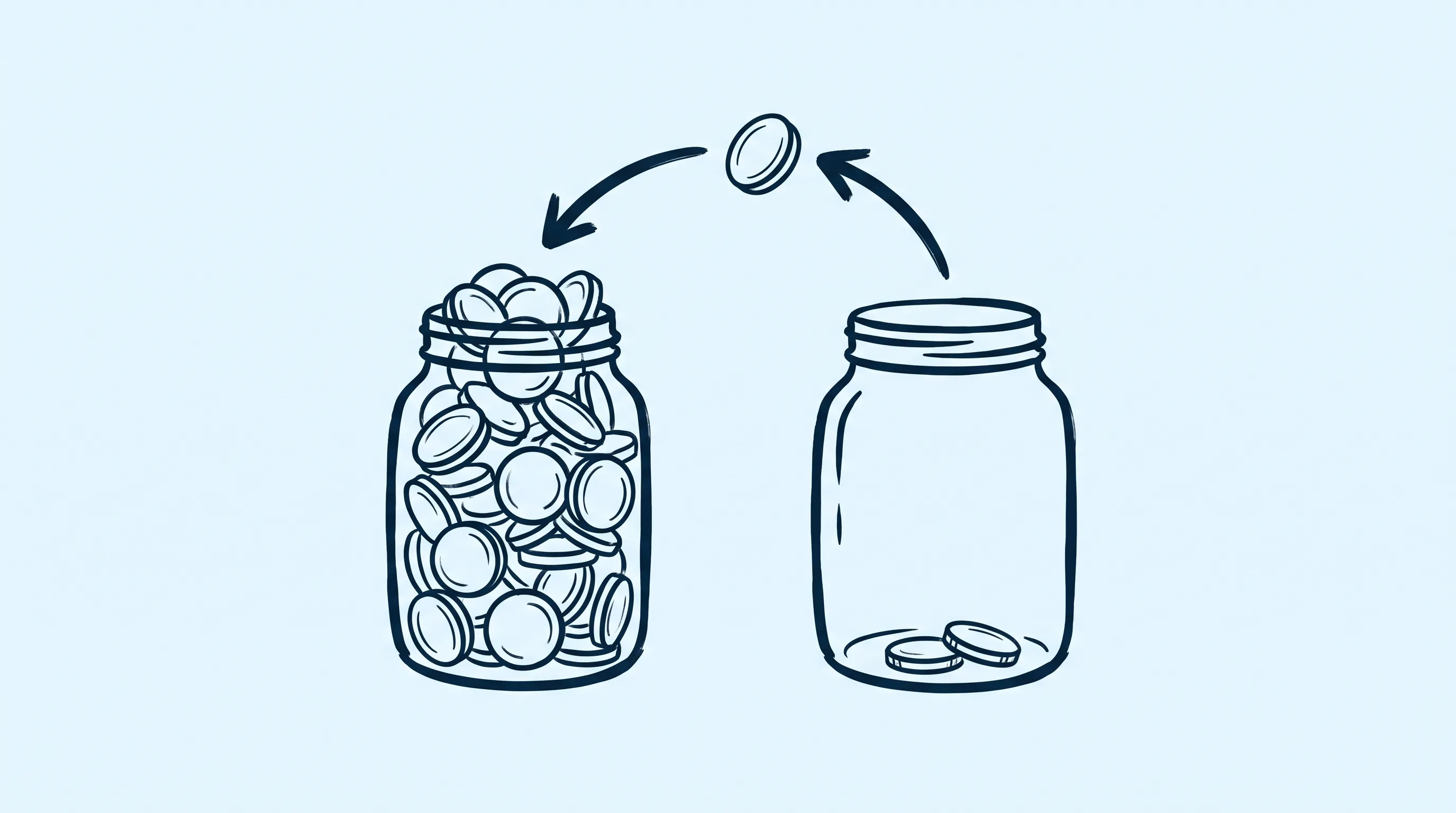
There's another reason looking at Black Friday in isolation can be misleading. Not every order generated during a Black Friday promotion exists because of Black Friday.
- Some customers would have bought anyway.
- Some would have bought in early December.
- Some would have bought closer to Christmas.
The promotion hasn't necessarily created all of that demand. In some cases, it has changed when the demand converts and the margin you make when it does.
Imagine Black Friday revenue increases by £300,000 year on year. Taken in isolation, that's a fantastic result. But what happens if December revenue then falls by £200,000?
You can't automatically conclude that Black Friday created £300,000 of additional demand. Some proportion of those sales may simply have moved from one part of the trading period to another.
Exactly how much is incremental is difficult to know. Previous trading patterns, category demand, promotional strategy, customer behaviour and wider market conditions all affect the answer.
But you can look at the shape of the whole period.
Did Black Friday grow peak, or did it just change its shape?
That's a very different question from whether Black Friday itself grew year on year.
And it matters because pulling December demand into November can have a commercial cost.
If a customer who would have spent £100 at full price in December instead spends £80 during Black Friday, you've successfully moved the transaction forward.
You haven't necessarily created more value. But you did get the dopamine hit of a record Black Friday sales day.
Don't spend everything at the point of maximum competition
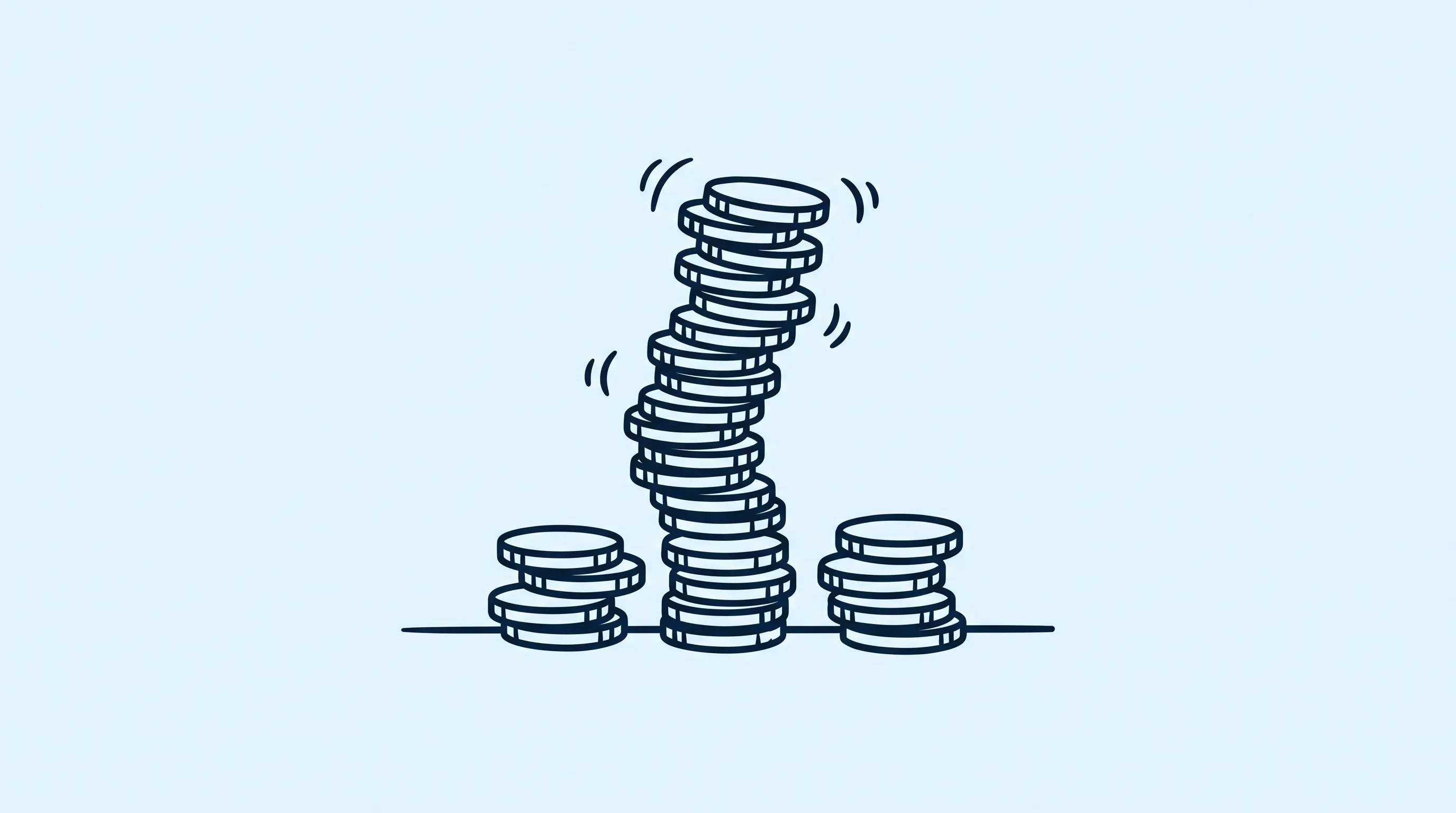
How you define the trading period should also influence how you allocate your marketing budget.
If Black Friday is treated as the finish line, it's easy for budget phasing to follow the same logic.
Spend ramps up through November, peaks around BFCM and then gets pulled back sharply as soon as Cyber Monday finishes.
That can mean concentrating an enormous amount of budget into one of the most competitive advertising periods of the year, then reducing investment while consumers are still actively buying Christmas presents.
That doesn't mean holding budget back from Black Friday for the sake of it. If the marginal return remains strong, there may be a very good reason to continue investing.
The point is that Black Friday shouldn't automatically have first claim on the entire peak budget simply because it's Black Friday. December demand has value too. If you can acquire that demand without the same promotional cost, it has the potential to be considerably more profitable.
Returns and when you actually know how peak went
There's one final problem with declaring peak a success on Tuesday 3rd December.
The revenue hasn't necessarily settled yet. For ecommerce businesses in particular, reported revenue during peak can look very different once returns and refunds have worked their way through. Some customers will have bought impulsively during the promotional period and later changed their mind. Others will have bought gifts that aren't even opened until Christmas Day. That means some of the returns generated by peak won't become visible until weeks after the sale.
Those return rates won't necessarily look like your normal customer cohorts. Applying an annual average return rate to peak revenue can therefore hide important differences in what those sales were actually worth.
This is where it's also useful to separate trading performance from commercial performance.
Trading performance tells you what happened during the period. Commercial performance tells you what was left when the economics settled.
You don't need to wait until January before making any decisions. There will be plenty you can learn and act on during the trading period. But be careful about declaring success before you've seen the full picture.

Judge the period, not just the event
Black Friday matters. For many businesses it will generate some of their biggest trading days of the year and there are very good reasons to put significant budget, planning and resources behind it. But remember it's one part of a much bigger commercial period.
So when you're reviewing performance, don't stop at asking:
Did Black Friday grow?
Ask the more important question:
Did the whole peak period grow?
05
Building the peak season plan
Peak planning has a habit of starting in the wrong place. Someone opens the marketing calendar, drops Black Friday and Cyber Monday in it and starts filling the boxes around them.
- When does Meta launch?
- When do the emails go out?
- What creative do we need?
- How much are we putting into Google?
They're all questions that need answering. They're just not the first ones.
.webp)
Before deciding how you're going to generate demand, you need to understand what the business is actually capable of selling profitably and delivering successfully.
What’s your objective? How much stock do you have? What can you afford to discount? Which products do you actually want to sell? How quickly can you replenish them? What's the last date you can guarantee Christmas delivery? What happens if demand is 50% higher than expected?
Those answers should shape the marketing plan, not the other way around.

Working backwards from the trading dates
Don't start with a media plan. Start with a calendar. Mark the dates that genuinely change what the business can do.
Black Friday and Cyber Monday are obvious, but they're only two of them.
You've got promotional start and end dates, stock arrival dates, last guaranteed Christmas delivery, different cut-offs for standard and express delivery, offer testing, creative deadlines and any point at which an offer, product or message needs to change.
Once you have this, start working backwards. If your last guaranteed Christmas delivery is 20th December, that's a commercial deadline.
Your website, ads and emails need to communicate it before then. Your delivery messaging needs to become increasingly prominent as you approach it.
And once you pass it, your marketing may need to change again.
The same applies at the other end of the period. If you want to start building demand in October, you can't be briefing the creative for that activity in the final week of September.
The trading calendar should create the marketing calendar, not the other way around. This doesn't need to be complicated. One shared peak calendar with every important date on it and one person responsible for keeping it current is enough.
Stock, margin and delivery constraints come first
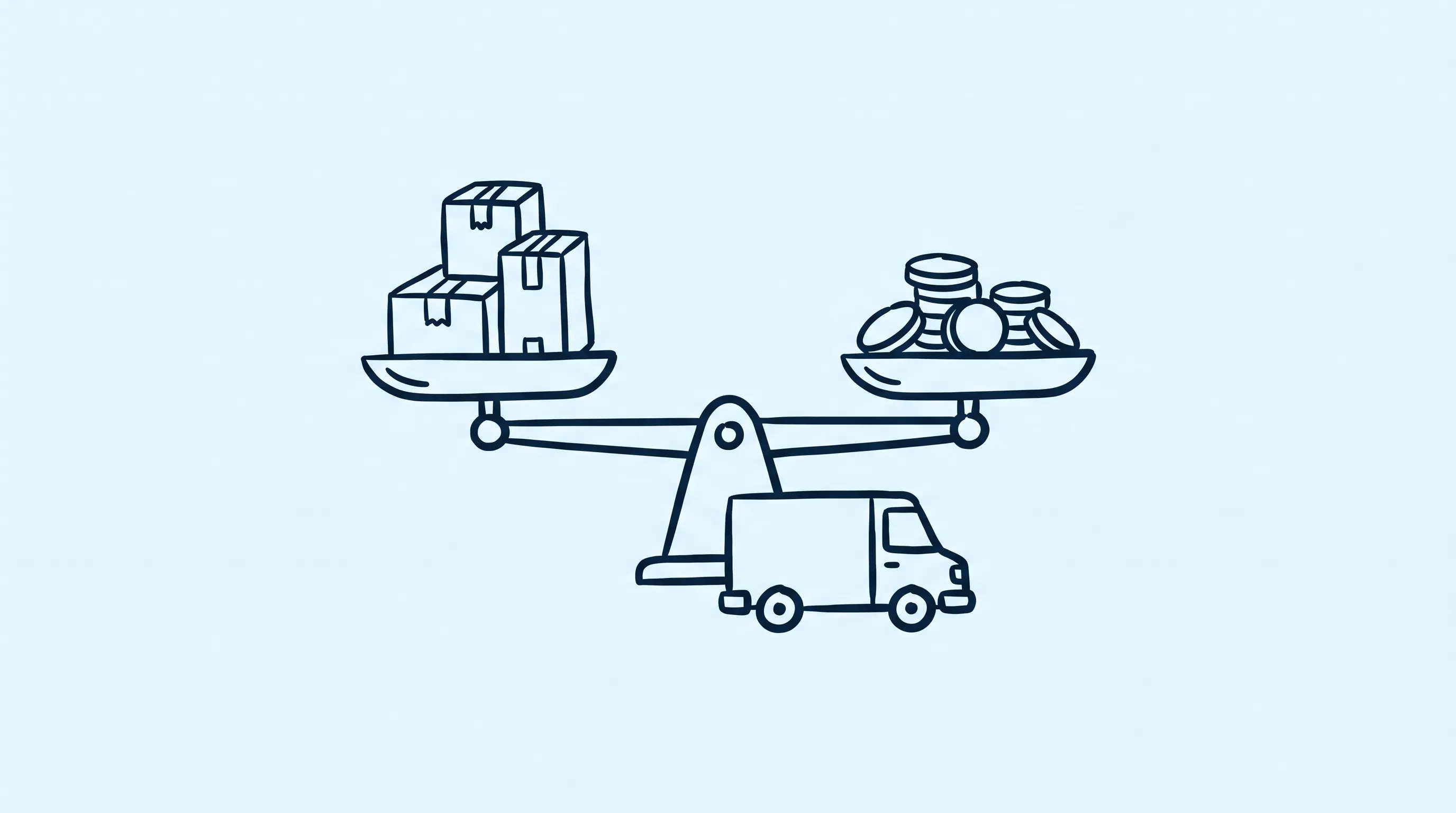
Once the dates are mapped, the next question isn't where to spend the budget. It's what you can actually sell.
Peak has a nasty habit of exposing decisions that looked perfectly reasonable when each department made them independently.
Marketing pushes the product with the best response. The promotion creates far more demand than expected and the warehouse struggles to fulfil it. Paid media keeps spending against products the business is already struggling to fulfil. Customer service gets buried in “where is my order?” emails and negative reviews start to accumulate, potentially influencing how future customers perceive the brand long after peak is over.
A record sales day isn't much use if the business can't fulfil it, so before you decide which products you're going to push, map the constraints around them.
For each priority product or category, you really only need to know a handful of things:
- Stock: what can we sell, how much is available and when can we replenish it?
- Margin: what do we make at full price and at the proposed promotional price?
- Demand: which products already have evidence that customers want them?
- Delivery: how much can we realistically fulfil and by when?
- Role: is this product there to acquire customers, generate margin, clear stock or increase basket value?
A high-margin product with plenty of stock and strong demand can support a very different strategy from a low-margin bestseller with limited inventory. Likewise, excess stock might justify a much more aggressive promotion than a product you're likely to sell through at full price anyway.
Your constraints aren't something to check after you've built the campaign. They're key inputs into the campaign.

Where paid, search, creative and conversion fit in
Only now would I start talking about marketing. Once you know what you're trying to sell, when you need to sell it and the economics and constraints you're working within, you can decide what each part of marketing needs to do.
Some activity needs to build demand before purchase intent peaks. Some needs to capture existing demand as customers enter the market. Creative needs to give people a reason to choose you when competition intensifies. Email and CRM need to convert the audience you already have and communicate changes in offer, urgency and delivery. And your website needs to turn as much of that increasingly expensive traffic into customers as possible.
The point isn't to give every channel a Black Friday plan. It's to give every channel a job within the peak plan.
There's always a big focus on increasing media spend at peak, but one of the most powerful levers available is improving the conversion performance of the site, particularly on high-value pages where changes can have an impact quickly.
Imagine you're expecting 100,000 sessions during peak. At a 2% conversion rate, that's 2,000 orders. Improve that to 2.2% and you've generated another 200 orders from exactly the same traffic.
You haven't increased the budget to generate more sales. You've increased the value of the budget you already have.
So the question for each part of marketing shouldn't be “what are we doing for Black Friday?” It should be “what job does this need to do within the peak plan?”
That's business first, channel second.

Don't build four separate channel plans
This is particularly important when you've got a small team or are stretched for time. You don't need a paid social strategy, PPC strategy, SEO strategy and CRO strategy all sitting in different documents.
You need one peak plan. If a priority product is going to be pushed heavily in November, that should flow through everything.
The product page needs to be ready. Search coverage needs to be there. Paid social needs the relevant creative. Email needs the product and offer scheduled. Stock needs monitoring. The promotional economics need agreeing. Everyone needs to know what happens if it sells faster or slower than expected.
That last part is where I'd put more effort than most businesses do. Don't just plan what you expect to happen and sit there feeling powerless when it doesn't go as you hoped.
Plan the decisions you'll need to make when reality doesn't follow the forecast.
- If stock falls below X, stop pushing the product.
- If CAC exceeds Y, reduce investment.
- If a product materially outperforms expectations and stock is healthy, increase investment.
- If delivery capacity becomes constrained, change messaging or reduce spend.
- If the promotional offer isn't generating enough incremental volume to compensate for the margin reduction, don't blindly keep scaling it because revenue is up.
You don't need sophisticated forecasting software to do this. You just need to agree the rules before you're staring at a dashboard on Black Friday wondering what to do.

Who signs off what and by when
A peak plan can be strategically brilliant and still fail because somebody didn't approve the discount until three days before launch.
For every major decision, establish what needs deciding, who owns it and the date after which changing it becomes painful.
The owner or commercial lead might sign off the objective, promotional economics and overall budget. Operations owns stock, replenishment, fulfilment capacity and delivery cut-offs. Marketing owns the campaign calendar, execution, creative requirements and website changes.
Where a decision crosses those boundaries, make it clear who has the final call. Peak requires clear decisions at speed, and ambiguity over who can make them wastes time you don't have.
Clear ownership is only half of it. You also need to know when those decisions have to be made.
- The discount needs approving before creative is produced.
- Offers need validating before you build the entire campaign around them.
- Priority products need agreeing before campaigns are built.
- Creative needs signing off before media needs it.
- Landing pages need testing before traffic peaks.
- Delivery dates need confirming before they're advertised.
- Reporting needs agreeing before everybody starts arguing about whether Black Friday was successful.
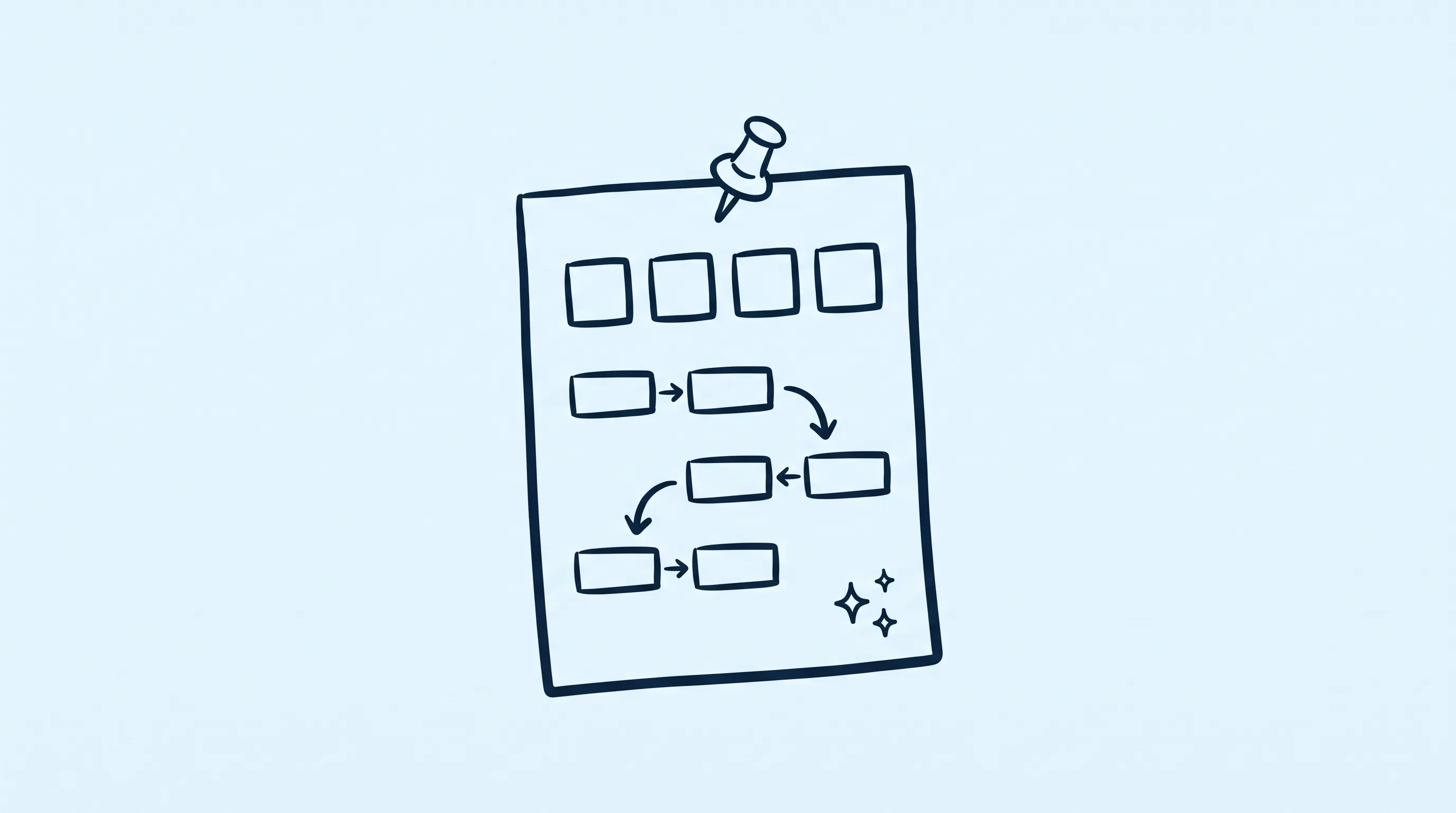
The peak plan should fit on one page
The core peak plan should fit on one page.
Across the top:
October → November → BFCM → December → Christmas cut-off → January
Then underneath:
Commercial objective → priority products → offer → stock constraints → margin floor → key dates → marketing activity → decision rules → owner
That's the plan. There can be campaign builds, creative briefs, forecasts and media plans underneath it, but those are execution documents. They should all answer to the same commercial plan.
Importantly, someone looking at that page should be able to understand what you're trying to achieve, what you're selling, the constraints you're working within, what's happening when and what decisions need to be made if reality doesn't follow the forecast.
That's what keeps peak planning in the right order. Decide what the business needs to achieve, understand the constraints you're working within, then decide how marketing helps you do it.
Business first. Channel second.
06
What needs to be ready before November
By the time November starts, the big decisions should already have been made. That might sound obvious, but I've worked with brands that haven’t finalised their Black Friday offer until November. In one case, we received the Black Friday creative at 3pm on Black Friday itself. By that point, any chance of success had long gone. We'd missed the three-week run-in and even the peak of Black Friday demand itself.

That doesn't mean the plan won't change. Performance will give you reasons to move budget, change creative, push different products and adapt the offer.
But November should be about trading and adapting, not fixing things that could have been sorted weeks earlier.
Here's the checklist of what you want to have completed before it starts.
Commercial decisions
- Objective agreed - Are you prioritising volume, margin, new customers or stock clearance?
- Offer agreed - What is it, which products does it apply to and when does it start and finish?
- Offer validated - Use October to test the different promotions and messages rather than discovering in November that the offer doesn’t land.
- Economics checked - Know what the promotion does to margin and how much additional volume it needs to generate to pay back.
- Priority products agreed - Know what you actually want to sell rather than simply discounting everything.
- Stock confirmed - Know what's available, what's arriving and what can be replenished.
- Margin floors set - Agree how far you're prepared to go before the additional revenue is no longer worth buying.
- Delivery capacity confirmed - Know how much you can fulfil and your key Christmas delivery cut-offs.
- Decision rules agreed - Know what happens if stock, CAC, demand or fulfilment move outside expectations.
Creative and assets
- Creative brief agreed - Products, offer, audiences and key messages are clear.
- Offer is instantly understandable - Customers can quickly understand what they get and what they need to do.
- Multiple creative routes ready - Don't rely on one Black Friday concept resized into every format.
- Proven creative retained - Don't switch off ads that already sell just because the promotion has started.
- Reasons to buy beyond price included - Product benefits, reviews, USPs, delivery and trust still matter.
- All key formats covered - Paid social, search, email, website and organic assets are ready.
- November production planned - A process is in place to quickly produce more creative around the products, messages and formats that start winning.
- Approvals sorted - Everyone knows who can sign off new creative and how quickly.
Website
- Ad-to-checkout journey checked - Product, price, message and offer remain consistent throughout.
- Priority pages ready - Fix the biggest conversion problems before sending more traffic to them.
- Offer clearly communicated - Mechanics, exclusions and deadlines are easy to understand.
- Mobile journey tested - Go through the actual purchase journey, not just the homepage.
- Checkout tested - Check the important devices, browsers and payment methods.
- Traffic capacity checked - Make sure the site and infrastructure can handle the demand you're planning to generate.
- Stock information accurate - Don't pay to drive traffic towards unavailable products.
- Delivery messaging ready - Make cut-offs increasingly prominent as Christmas approaches.
Measurement
- Success agreed - Everyone knows which commercial outcomes determine whether peak has worked.
- Daily trading view ready - One simple place to see enough information to make decisions quickly.
- Baseline agreed - Decide what you're comparing against before you see the result.
- Core metrics available - Revenue, orders, margin/contribution, CAC, customer mix, stock and returns where relevant.
- Tracking tested - Purchases, revenue and other critical conversion events are recording correctly.
- Commercial view available - Don't rely on Meta and Google independently telling you how well they performed.
- Whole peak period accounted for - Don't judge success from Black Friday weekend alone.
- Reporting owner agreed - One source of truth rather than competing versions of performance.
Things will change. That's the point of planning ahead of the BFCM period.
The aim isn't to have November mapped so rigidly that nobody can react. It's to have the fundamentals sorted so the team can react to performance, rather than spending peak fixing preventable problems.
November should be for trading, learning and adapting. Not for getting ready or testing what might work.
07
Make Black Friday commercially valuable
Black Friday doesn't need to be about choosing between growth and profit, But it does require knowing where the value is actually being created.
What you're giving away through the offer, what you're spending to generate demand, which customers and products are worth acquiring and whether the whole peak period leaves the business better off.
The problem is that most businesses don't have a clear enough view of where that money is going.
We typically find 15-30% in wasted marketing spend in the first 3 months.
We connect your marketing performance back to the commercial reality of the business to identify where budget is being wasted, where profitable growth is being constrained and where the biggest opportunities sit.
It's the same principle we applied with Ravensburger. Paid media was already generating revenue across four territories, but activity wasn't aligned around a single commercial picture. We rebuilt the approach around commercial value, prioritising the products that mattered most to the business, sharing learnings across territories and putting budget into trading windows they had previously been missing.
Instead of asking how to get more from each campaign, the starting point became where the business had the greatest commercial opportunity and how marketing investment could capture it.
If you want to understand where your marketing budget is really creating value, where it's being wasted and where your biggest opportunities sit, start with a Growth Intelligence Audit.
Stopped growing online?
We know how to fix that.
We start with your data, not your channels.
Commercial, market, performance, customer and behavioural data, woven into one view rather than five separate reports.
It shows where your profit comes from, which activities earn their place, which are dead weight, and what's worth doing next.
We typically find 15-30% in wasted marketing spend in the first 3 months.
Channels are the tools; making your business more money is the objective.
Latest News
See allBlack Friday Strategy Guide
Black Friday is a margin decision, not a marketing one. Plan your peak around profit and last year's numbers before you spend a penny.


The Consumer Decision-Making Process
Join us as we explain how consumers make purchase decisions, and how this theory can be used across digital Marketing. Read more online at 43 Clicks North.
.jpg)
Boost Your Sales: 7 Must-Have Elements for High-Converting Landing Pages
Want to know how to create high converting landing pages? Join 43 Clicks North as we share our 7 key elements to creating landing pages that consumers buy from.