
PPC Ad Messaging Tips to Improve Click-Through Rates


Generic ad copy often struggles to capture attention, and this often leads to weak campaign performance. Many campaigns end up with click-through rates below the typical industry range of 2–5%, which results in wasted ad spend and limited reach.
This happens because the messaging focuses on listing product features instead of addressing real customer problems. As a result, phrases such as “high-quality materials” or “advanced design” sound vague and easily blend into crowded feeds. When readers encounter these generic claims, they tend to keep scrolling because the message does not connect to a clear need or outcome.
To improve performance, ad messaging needs to shift toward the benefit a customer receives. It becomes easier for readers to see how the product fits into their daily life when a headline highlights a clear outcome. That immediate relevance increases the likelihood of engagement and clicks.
With this in mind, the first step is refining headlines so the value becomes clear at a glance.
Use Benefit-Driven Headlines
People scan ads and search for messages that solve a problem or improve a situation. Headlines that highlight the result a customer receives stand out more easily in crowded feeds.
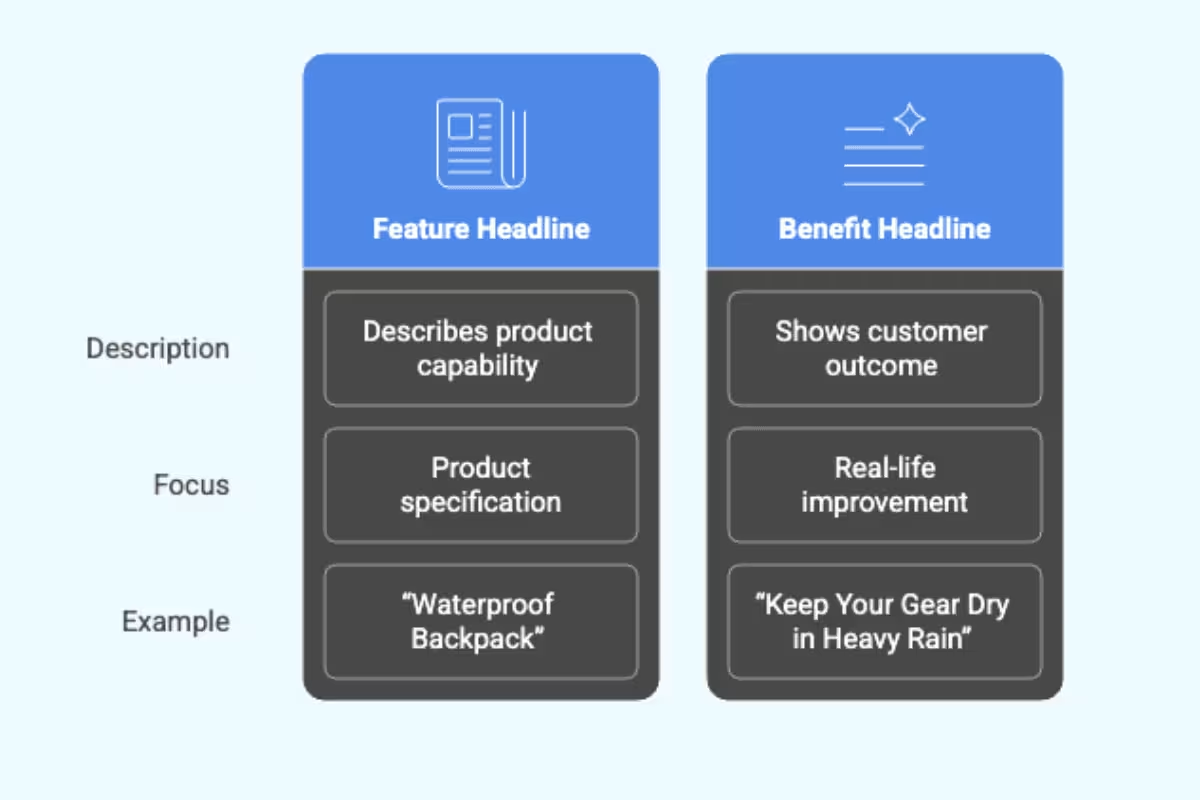
Consider the difference.
Both headlines describe the same product. The benefit headline focuses on the outcome the customer experiences. This makes the message easier to understand during a quick scroll.
The following steps show how to turn product features into benefit-focused headlines that clearly communicate value.
How to Write Benefit-Focused Headlines
Step 1: Identify the Customer Problem
Start by identifying the frustrations customers experience with the product category. These insights reveal what people actually want solved.
Useful sources include product reviews, customer questions on marketplaces, search phrases people use online, and comments on social media.
Look for repeated complaints or frustrations and write down three to five common problems. For example, if the product is an insulated water bottle, common customer concerns may include:
- Drinks warm up too quickly
- Bottles leak inside bags
- Condensation makes hands wet
These insights reveal the situations your headline should address.

Step 2: Translate the Feature Into a Clear Outcome
Once you identify a customer problem, connect a product feature to the improvement it creates in daily use. A helpful way to do this is to repeatedly ask: “What does this allow the customer to do?” Continue answering the question until the benefit becomes clear.
For example:
Feature → insulated stainless steel
What does this allow? → drinks stay cold longer
What does this allow? → the drink stays cold throughout the day
The final answer usually reveals the outcome that should appear in the headline. The final headline: “Keep Your Drink Cold All Day.”
This makes the buyers quickly understand the value as the headline highlights a clear result instead of a product specification.
Messaging Mistakes That Reduce Performance
1. Fake Urgency
Many ads repeat phrases such as “Limited Time Only”, “Act Now”, or “Last Chance” without a clear reason. Customers often see the same message several times across weeks or months. This repetition signals that the urgency is artificial.
Once buyers suspect exaggeration, trust declines quickly. Instead of creating excitement, the message creates doubt about the brand. People may still click out of curiosity, but they often leave the product page once they realise the promotion is not truly limited. This behaviour increases bounce rates and wastes advertising budget on visitors who never intended to purchase.
Urgency performs better once the message reflects a real situation. Examples include:
- “20% Off Winter Jackets Until Sunday”
- “Only 50 Travel Backpacks Left in Stock”
- “Free Shipping Ends Tonight”
Each example communicates a clear reason the offer may disappear. The buyer understands the time limit or stock constraint, which makes the urgency believable.
2. Questions That Offer No Solution
Questions in headlines can attract attention because they mirror the thoughts many buyers already have. A shopper scrolling through a feed may pause at a message that reflects a familiar frustration.
Example: “Tired of Shoes That Hurt After Long Walks?”
The question captures interest because it highlights a real problem. The difficulty appears if the ad never explains the solution clearly.
This may create disappointment. People click expecting relief from the problem, but they encounter an unclear message instead. Questions work best once the solution appears directly beside the problem.
Example:
Improved version: “Tired of Shoes That Hurt Your Feet? Try Cushioned Running Shoes Designed for All-Day Comfort.”
The improved message connects the frustration to a specific benefit. The reader understands how the product solves the problem, which increases the chance of a click and purchase.
3. Trendy Terms Without Relevance
Buzzwords often appear in advertising because they attract attention and signal innovation. Words such as “AI,” “smart,” “next generation,” or “revolutionary” frequently appear in product ads across many industries.
The issue appears once these terms appear without a clear connection to the product’s actual value. Here is an example:
Headline: “AI-Powered Water Bottle”
Most shoppers immediately question what artificial intelligence has to do with a water bottle. The message feels confusing rather than helpful.
Irrelevant buzzwords create two problems:
- The wrong audience clicks the ad. People curious about the trend may click even though they have no intention of buying the product.
- Advertising platforms reduce the ad’s quality score. Search engines and ad platforms evaluate how closely a message matches the landing page and user intent. Once the message feels misleading or unrelated, performance scores decline, which increases the cost of each click.
These mistakes often appear in campaigns that rely on attention-grabbing phrases instead of clear value. Messages that reflect real problems, believable claims, and relevant benefits attract the right audience and lead to stronger engagement.

Tip 2: Audience-Specific Personalisation
A headline that speaks to everyone often provides little context, which causes the ad to blend into the feed instead of standing out.
Ads perform better once the message reflects the priorities of a specific audience. People respond more strongly to content that aligns with their interests, lifestyle, or stage in the buying process because it feels immediately relevant. Research on consumer behaviour supports this pattern.
Personalised messaging increases engagement because it reflects situations, preferences, and motivations that buyers already recognise. The same principle applies to ad headlines. Once a message reflects the context of a specific audience, the product becomes easier to recognise as relevant.
To apply this idea effectively, advertisers organise their audiences into clear segments and adjust their messaging. The process below explains how to structure this approach.
How to Personalise Ad Messaging
Step 1: Define 3–5 Audience Segments
Begin by organising your audience into a small number of clear segments based on behaviour or purchase intent. A limited number of segments keeps testing manageable and helps ensure that each ad message reflects a distinct audience context.
In Meta Ads Manager, you can create Custom Audiences using pixel events that indicate different stages of interest in a product. Examples include:
- Viewed product pages in the last 30 days
- Added items to the cart, but did not purchase
- Previous purchasers
- Visitors who viewed multiple products
Each segment represents a different stage in the buying process. Someone browsing product pages may still be exploring options, whereas a cart abandoner has already shown a stronger level of purchase intent. Structuring audiences around these behaviours helps ensure that each ad message reflects the situation the shopper is currently in.
For example, an e-commerce clothing brand may organise audiences into segments such as:
- Price-sensitive shoppers browsing discounted items
- Shoppers viewing newly released products
- Visitors who abandoned items in their cart
Avoid creating too many segments. In most cases, three to five segments provide enough variation to personalise messaging without overcomplicating campaign structure.
Step 2: Identify What Each Segment Values Most
Different audiences often respond to the same product for different reasons, so identifying these motivations helps shape headline messaging that reflects what matters most to each segment.
Useful insights often appear in places where customers describe their expectations, questions, or experiences with a product. These sources include:
- Product reviews
- Customer questions on product pages or marketplaces
- Search terms that lead visitors to your site
- Comments on social media posts
- On-site search queries
They reveal the exact words people use to describe their needs and the outcomes they want from a product. Once you identify these motivations, you can shape headlines around the outcomes buyers already value instead of using broad product descriptions.
Step 3: Turn the Segment Motivation Into the Headline Benefit
Personalised headlines reflect the reason that a specific group is considering the product in the first place. A helpful way to structure this process is:
Product feature → Audience motivation → Headline benefit
This ensures that the headline focuses on the outcome that matters to the audience rather than listing product attributes.
To apply this process:
- Identify the feature of the product that supports the audience’s goal
- Connect that feature to the motivation discovered in Step 2
- Present the resulting benefit as the central message of the headline
Once your headline messaging reflects the motivation behind each audience segment, the ad becomes easier for shoppers to recognise as relevant.
Messaging Mistakes That Reduce Personalisation
1. Personalising the Audience but Not the Message
Some campaigns create multiple audience segments but use the same headline or creative across every ad set. For example, a brand may run separate campaigns for:
- Recent website visitors
- Cart abandoners
- Previous purchasers
If every segment receives the same headline, such as “Premium Running Shoes Available Now,” the message does not reflect the different stages each group is in.
Cart abandoners may respond better to messaging that reminds them about the product they considered. Previous purchasers may respond to messaging about upgrades or new releases. Without adjusting the headline or angle, segmentation alone does not create meaningful personalisation.
2. Using Audience Labels Instead of Customer Context
Some ads attempt personalisation by naming the audience directly instead of reflecting their real situation. Examples include headlines such as:
- “For Busy Professionals”
- “For Fitness Lovers”
- “For Students”
These labels identify a group but do not describe the experience or problem the product solves. As a result, the message still feels broad.
3. Overloading the Message With Multiple Angles
Some ads attempt to personalise messaging by including several selling points in the same headline or creative.
For example: “Lightweight Running Shoes With Arch Support, Breathable Mesh, and Shock Absorption.”
Although each feature may appeal to different audiences, presenting them all at once weakens the clarity of the message. The viewer must process multiple ideas instead of immediately recognising the benefit that matters most to them.
Tip 3: Use CTAs That Spark Emotion
The CTA often appears as a simple instruction such as “Learn More,” “Shop Now,” or “Click Here.” These phrases communicate the action, but rarely reinforce why someone should take that action.
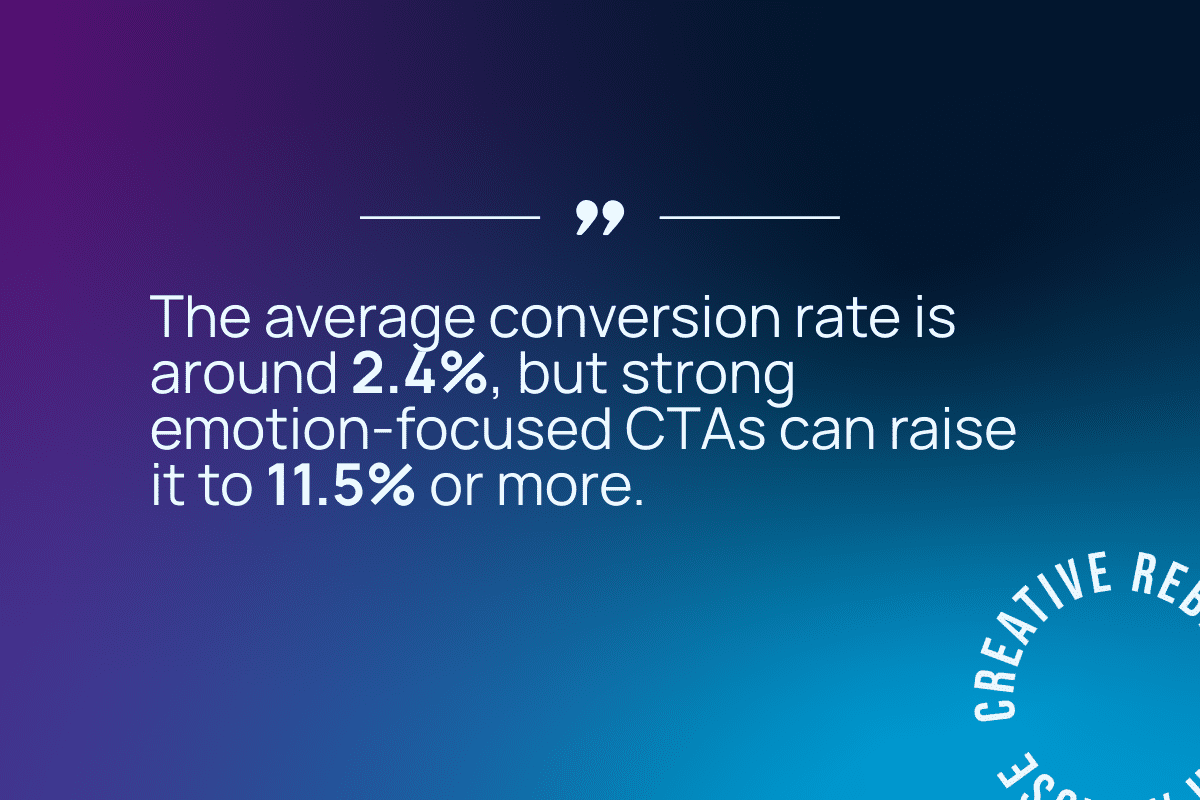
Using emotion-focused CTAs connects the action with a feeling or outcome that the customer wants. It reinforces the value introduced in the ad message. Research on website performance highlights the impact of this small change.
A strong CTA reassures buyers that taking action leads to the outcome they want. For example, compare the following approaches:
Weak CTA: “Learn More”
Improved CTA: “Start Sleeping Better Tonight”
The improved version feels purposeful because the reader connects it with the improvement they want to experience. Once the CTA reflects the emotional motivation behind the purchase, the transition from interest to action becomes clearer. The following process explains how to make CTAs that support this shift.
How to Build Emotional CTAs
Step 1: Identify the Emotional Motivation Behind the Purchase
Common motivations include:
- Saving time
- Reducing stress
- Feeling confident
- Improving comfort
- Achieving better results
These motivations often appear in product reviews, customer feedback, support questions, and social media comments.
Look for phrases that describe how people want to feel after using the product. These emotional outcomes often become the foundation of the CTA message.
Step 2: Combine the Action With the Desired Outcome
A strong CTA usually combines two elements: Action + emotional outcome
The action invites the click. The outcome reminds the reader of what they gain from taking that step.
Examples include:
- “Start Your Free Trial” → action only
- “Start Saving Hours Each Week” → action + outcome
Short CTAs often perform better in mobile environments, so keeping the message direct helps maintain clarity.
Step 3: Test Variations to Identify the Strongest Response
Different audiences respond to different motivations, so testing CTA variations helps identify the message that generates the strongest engagement.
A common testing structure includes:
- One neutral CTA
- One benefit-focused CTA
- One emotion-focused CTA
For example:
Version A: “Learn More”
Version B: “See How It Works”
Version C: “Start Saving Time Today”
Run each version long enough to collect meaningful engagement signals such as clicks, landing page visits, and conversions. These comparisons reveal which emotional triggers resonate most strongly with the audience.
Small changes in the CTA often produce noticeable differences because the message appears at the final moment before a user decides whether to continue or scroll away.
Messaging Mistakes That Weaken Emotional CTAs
1. Overly Dramatic Language That Feels Unrealistic
Emotion works because it reflects believable improvements in a customer’s daily life. Some ads weaken this effect once the language becomes exaggerated or unrealistic.
Examples include phrases such as:
- “Transform Your Life Instantly”
- “The Ultimate Solution to Everything”
- “Guaranteed Happiness”
These statements often feel disconnected from the actual product experience. Readers recognise exaggeration quickly, especially in crowded advertising environments where similar claims appear frequently.
2. CTAs That Compete With Too Many Actions
Another mistake appears once ads include multiple competing CTAs. For example, a creative may present several options at once:
- “Learn More”
- “See Reviews”
- “Shop Now”
- “View Options”
This forces the viewer to decide which action matters most before they even click. Emotion-focused CTAs should guide the viewer toward one clear next step. A single action connected to a clear outcome keeps the decision simple and reinforces the narrative established in the headline and ad message.
3. Emotional CTAs That Appear Too Late in the Creative
Many ads present emotional language only in the CTA, though the earlier parts of the creative remain neutral or feature-focused.
For example:
Headline: “High-Performance Noise-Cancelling Headphones”
Body copy: “Premium drivers with advanced sound engineering.”
CTA: “Finally Enjoy Quiet Focus”
Emotion-focused CTAs should appear consistently across the creative. The headline introduces the outcome, the body copy reinforces it, and the CTA acts as the final invitation to experience that result.
These mistakes rarely appear obvious at first because the CTA itself may still look persuasive. The issue often comes from how the CTA connects with the surrounding message.
When this alignment is missing, ads often struggle to turn attention into engagement. If reaching the right customers continues to feel difficult, an experienced ad specialist can help identify what may be affecting performance.
Make Your Ads Easier for Customers to Recognise Instantly.
At 43 Clicks North, we help e-commerce and B2C lead generation brands improve campaign performance through structured ad messaging and creative testing systems.
- Message frameworks built around real customer problems, so headlines highlight benefits instead of generic product claims
- Audience-aligned creative variations that reflect different motivations, allowing ads to connect more clearly with specific segments
- Structured testing environments where headlines, angles, and CTAs evolve based on engagement signals rather than guesswork
- Campaign setups that support consistent optimisation, helping advertising platforms identify which messaging resonates with the right customers
Work with a team that focuses on building ad messaging systems designed for continuous learning and improvement. Reach out today to start building campaigns that connect with the right customers.
Stopped growing online?
We know how to fix that.
We start with your data, not your channels.
Commercial, market, performance, customer and behavioural data, woven into one view rather than five separate reports.
It shows where your profit comes from, which activities earn their place, which are dead weight, and what's worth doing next.
We typically find 15-30% in wasted marketing spend in the first 3 months.
Channels are the tools; making your business more money is the objective.
Latest News
See all
5 Conversion Blockers That Hurt Black Friday Sales
Shoppers are ready to buy this season, but site blockers can send them to competitors. Discover 5 mistakes to avoid and how to fix them.


5 Strategies to Boost Ecommerce Landing Page Conversions
Your ecommerce landing page is critical in the success of your online store. Join 43 Clicks North as we share our tips on boosting your conversion rates.

How building/nurturing communities can benefit your brand
One of the most enigmatic marketing strategies, has always been communities. Find out how building & nurturing communities can benefit your brand with 43CN.