
Landing Pages: The Art of Conversion


While landing pages are arguably one of the most important elements in a marketing funnel they are often overlooked when businesses are trying to drive conversions through paid media.
When looking at overspends and improving the performance of your paid media campaigns it's easy to fixate on the ads and other minutiae details that make up your campaigns and can act as levers to improve the performance of your return on investment (ROI).
However the biggest lever that is missed or simply left for later and that later just never manages to come, is your landing pages. If you increase landing page conversions, be that selling a product, a service or generating leads you're increasing the returns on your ad spends.
The first step to optimising your landing page
The first step on optimising your landing page is to know what your bounce rate is and what it should be.
FYI: If you're unsure what bounce rate actually is, it just means the percentage of people who come to a page, then bounce/leave again without interacting with the page at all.
So depending on where your traffic is coming from you can check in Meta ads and for Google Ads.
Now you know what your bounce rate is, the question is - Is it a good or bad bounce rate?
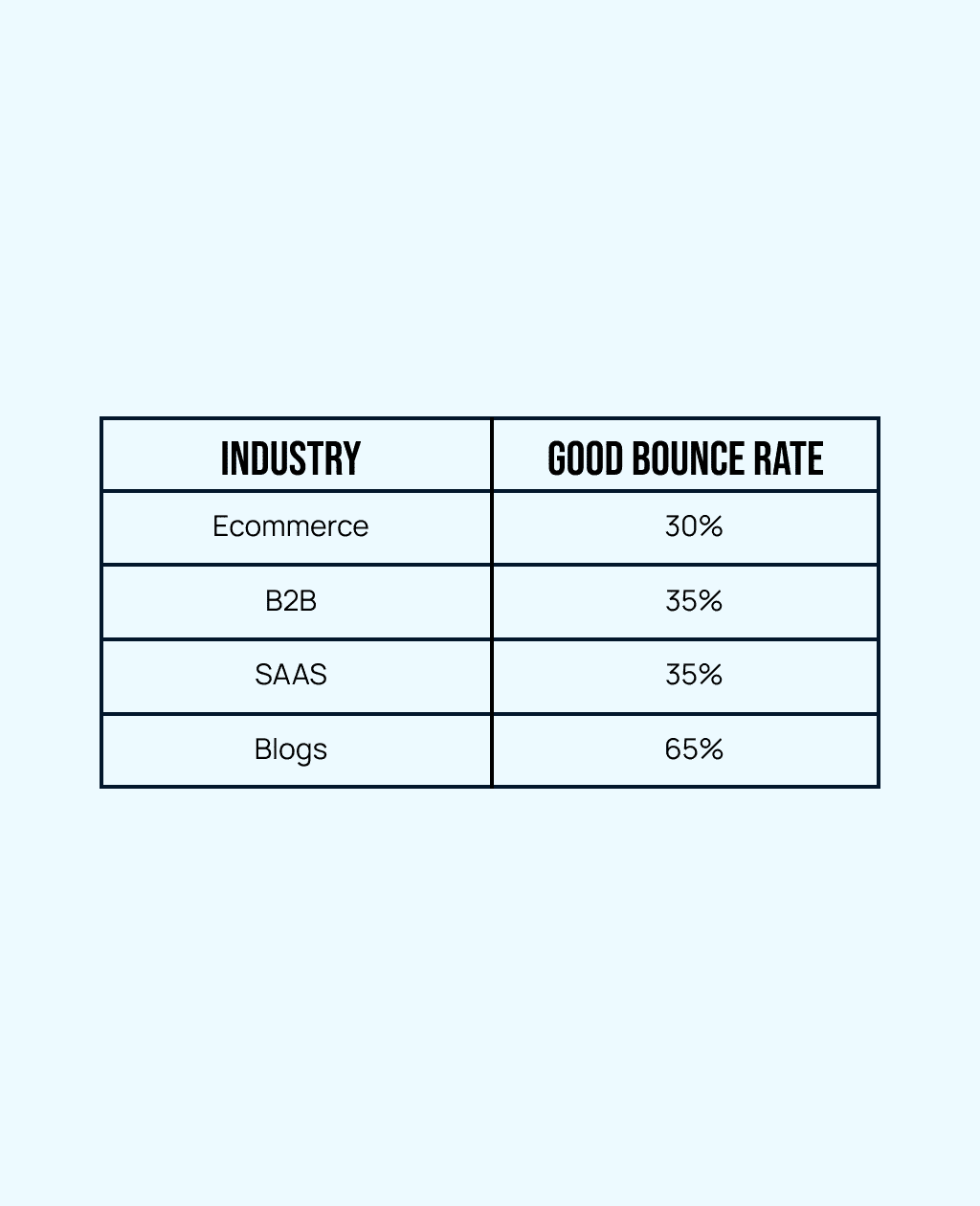
The short answer to this is that it depends. Advanced practitioners of the mystic arts of conversion rate optimisation (CRO) understand that bounce rate analysis requires industry context, traffic source segmentation, and device-specific behaviour patterns. E-commerce sites achieving below 30% demonstrate superior user experience optimisation, while B2B services exceeding 60% indicate conversion psychology barriers requiring professional intervention (that’s where we come in, read about our CRO service here). The table to the right however is a rough breakdown by sector that should help show what the good end of average bounce rates would be.
If your bounce rates are below these figures congratulations! You have a top tier website for bounce rates, if however you haven't then you're going to need to do a deeper dive into what is causing traffic you're sending there to leave.
Whether they know it or not, creators of successful landing pages are making pages that are intuitive, automatic, having users doing both heuristic thinking and deliberate analytical thinking. Landing pages must work for both fast, intuitive decisions and deliberate analysis.
Time to stop and look at your landing page
Your landing page should be built around one clear primary goal, with a potential secondary goal as lower bar action. Depending on your primary goal when you boil it down you'll want the person coming to your page to make a purchase or to give you their information.
If they are bouncing they're not doing either of those and you've paid the cost of that click for nothing.
Most businesses optimise for features, but conversion requires optimising for emotional states and decision-making patterns of your customers.
When people are coming to your landing page they aren't looking just to buy a product or service, they are looking for solutions to a problem.
Understanding the Psychology of Landing Page Purpose
At the functional level, visitors need to understand what you're offering and how it solves their immediate problem. But dig deeper and you'll find the emotional job - perhaps they're seeking confidence, status, security, or belonging. The most sophisticated landing pages speak to both layers.
Consider how this plays out differently across audience types. B2B visitors operate within "committee psychology" - they're not just solving their own problem, but considering how their decision will be perceived by colleagues and superiors. This introduces career risk assessment into the decision-making process, requiring different psychological triggers than B2C scenarios.
The Above The Fold Trinity: What, Why, How
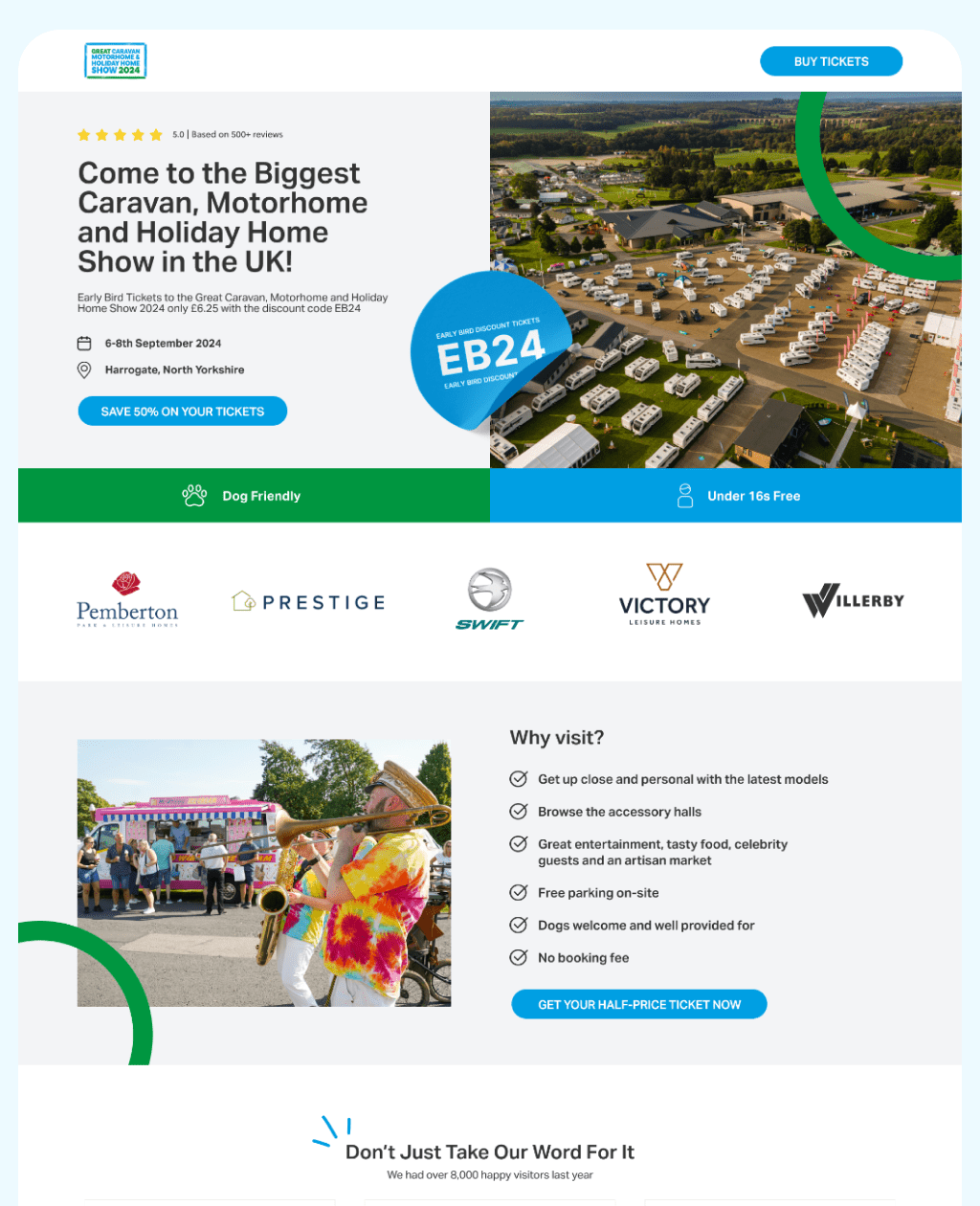
Users make snap judgements within 0.8 seconds based on cognitive shortcuts and emotional triggers. The most effective landing pages follow the sacred trinity of psychological persuasion: What, Why, How.
What (The Anchoring Effect in Action)
Your headline serves as the primary cognitive anchor. The first information encountered influences all subsequent judgements by 50-80%. This isn't just about stating what you're selling - it's about establishing psychological positioning that frames the entire user experience.
For headlines easier-to-process information feels more truthful and valuable. This isn't about dumbing down; it's about managing cognitive load for better decision-making.
Why (Social Proof and Authority Triggers)
Social proof can provide several things, one is known as the Bandwagon Effect - in-group/out-group thinking that can ensure your social proof resonates with your specific audience. While it can also increase credibility as can the perceived expertise from authority triggers.
How (Choice Architecture and Friction Reduction)
Your call-to-action represents the key point in the choice architecture presented above the fold. Too many options reduce conversion by 25% per additional choice - professional landing pages eliminate decision paralysis through strategically limiting options.
Elements like "no credit card required" address multiple barriers simultaneously:
- Loss Aversion: Removes fear of unwanted charges
- Commitment Anxiety: Reduces perception of long-term obligation
Trust Deficit: Signals confidence in product value
Mastering the Fundamentals
Landing page optimisation is about understanding why people make decisions and removing barriers that stop them converting.
Whether you're running a £50k startup or a £5M enterprise, the principles remain the same: clear headlines that anchor expectations, social proof that builds trust, and friction-free actions that make saying "yes" effortless.
Your landing pages are either working for you or against you - there's no middle ground. If your current pages aren't delivering the results you need, it might be time to bring in specialists who understand both the psychology and the practice.
The art of conversion is really just good psychology applied consistently. Master the fundamentals, and the magic happens naturally.
Ready to transform your landing pages from conversion killers to revenue generators? Get in touch and find out how our CRO specialists can improve your pages performance.
Stopped growing online?
We know how to fix that.
We start with your data, not your channels.
Commercial, market, performance, customer and behavioural data, woven into one view rather than five separate reports.
It shows where your profit comes from, which activities earn their place, which are dead weight, and what's worth doing next.
We typically find 15-30% in wasted marketing spend in the first 3 months.
Channels are the tools; making your business more money is the objective.
Latest News
See all
5 Conversion Blockers That Hurt Black Friday Sales
Shoppers are ready to buy this season, but site blockers can send them to competitors. Discover 5 mistakes to avoid and how to fix them.


5 Strategies to Boost Ecommerce Landing Page Conversions
Your ecommerce landing page is critical in the success of your online store. Join 43 Clicks North as we share our tips on boosting your conversion rates.

How building/nurturing communities can benefit your brand
One of the most enigmatic marketing strategies, has always been communities. Find out how building & nurturing communities can benefit your brand with 43CN.