
How to Fix Meta Ads That Are Losing Effectiveness


You’re spending consistently, yet performance feels weaker. CPLs swing, CTRs soften on once-reliable ads, and reach is harder to predict. Within Ads Manager, everything still looks structured—so what’s going wrong?
It’s not a traffic problem. Meta is still delivering impressions at scale. The real issue begins earlier: engagement signals feeding the system have weakened. Signals have quietly narrowed, limiting exploration and causing instability.
Meta optimises for behaviour, not structure. When attention signals thin out, learning compresses, delivery narrows, and performance becomes unpredictable. This is why accounts can look “healthy” while efficiency quietly erodes.
Why Your Meta Ads Feel Unstable
Across e-commerce and B2C lead generation, you may notice:
- Rising CPL or cost per purchase despite stable campaigns
- CTR slipping on previously strong ads
- Reach becoming inconsistent even with steady budgets
- Forecasting feels less reliable
Meta does not optimise for tidy structure. It optimises for signal strength—clear, repeated engagement patterns. When signals lack clarity or intensity, delivery concentrates on small clusters, frequency rises, and acquisition costs increase.
The root problem sits at the attention layer: ads must pull attention with a clear emotional reason. Safe or broad messaging produces shallow engagement, which limits learning.
Stop Relying on One “Winning” Ad
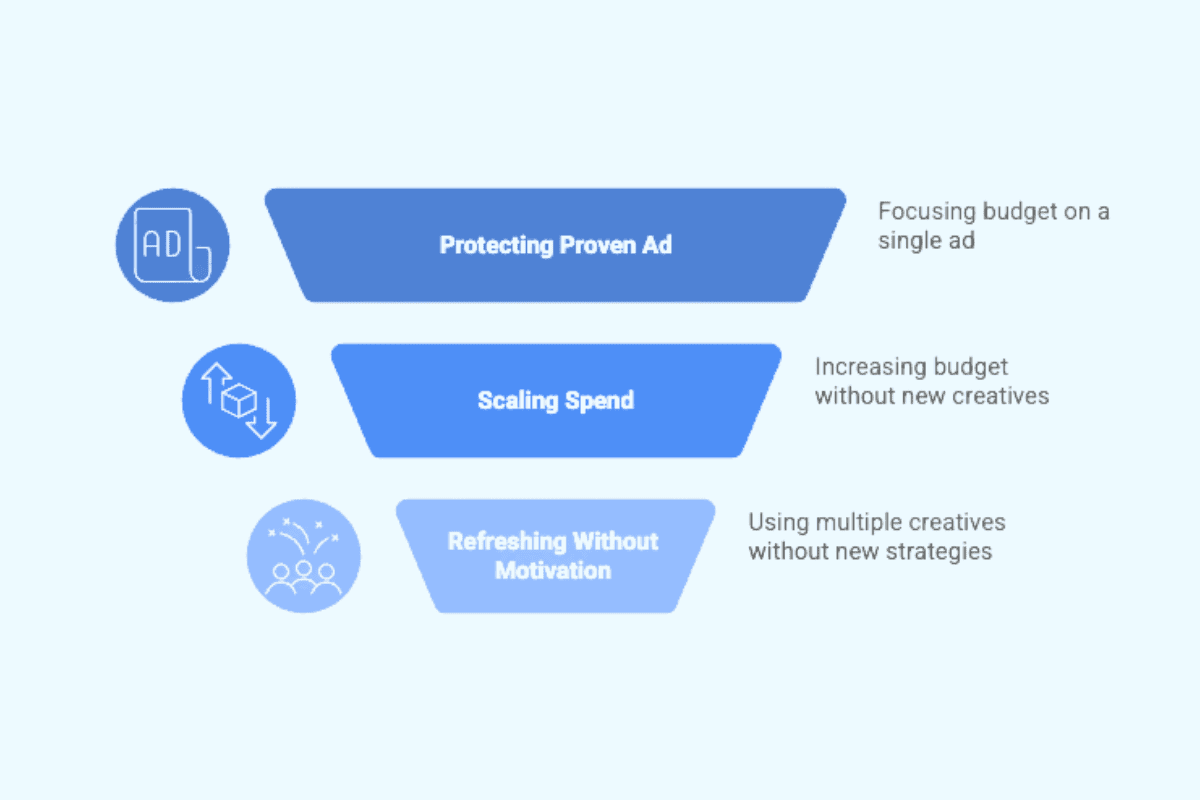
When most of your budget flows to a single ad or emotional concept, learning becomes compressed. Accounts often run with 70–90% of spend tied to one idea, which may still deliver results—but Meta is learning almost exclusively from a single motivation. This creates fragility and reduces the algorithm’s ability to discover new high-performing clusters.
How to Fix:
To restore stable learning and expand exploration, try the following:
- Limit any single concept to ~40–50% of total spend
- Launch at least two additional concepts built around distinct motivations
- Group ads by motivation rather than individually
- Keep proven ads live without letting them dominate spend
If you continue over-relying on one ad, your account will remain fragile. Avoid these mistakes:
- Allowing one ad to control most of the budget
- Ignoring underperforming or underrepresented motivations
Rotating variations of the same core message as if they were new concepts
Test Distinct Motivations, Not Just Variations
Refreshing creative alone does not expand performance if all variations share the same underlying emotional promise. Ads may look different visually or in format, but if they convey the same message—savings, simplicity, credibility—they feed the same signal cluster, limiting exploration.
How to Fix:
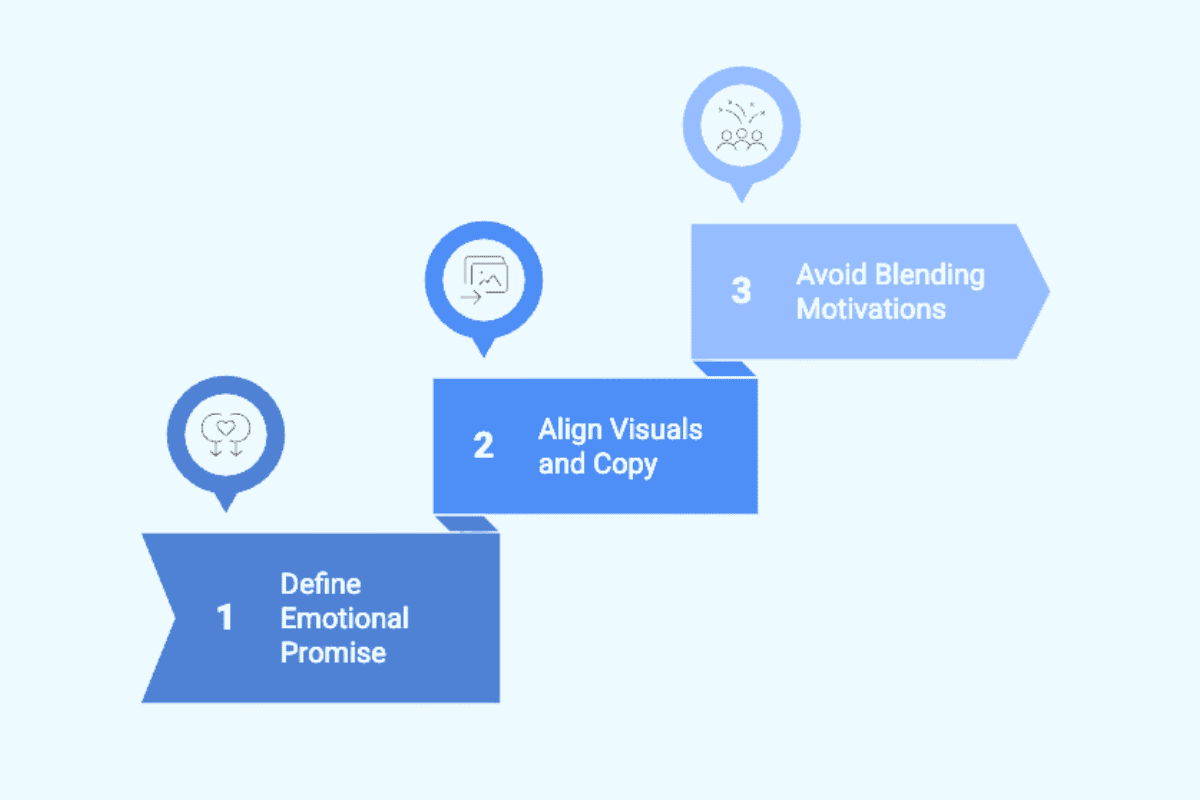
Introduce distinct motivations to give Meta multiple behavioural clusters to learn from:
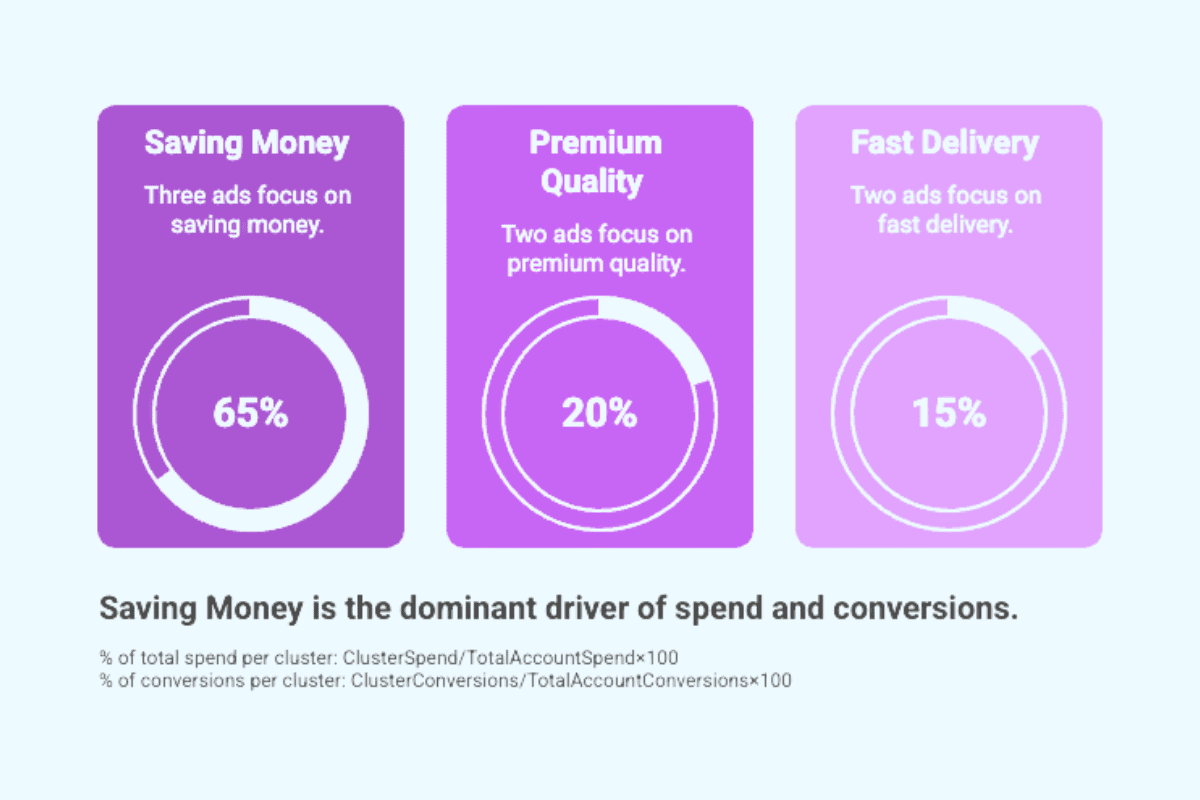
- Map emotional coverage gaps (e.g., e-commerce: security, identity, self-improvement, convenience, belonging; B2C lead gen: career growth, confidence, certainty, relief, opportunity)
- Design distinct concept frameworks with one clear emotional promise per concept
- Align landing pages to each concept to reinforce post-click behaviour
- Give each concept enough time and budget to collect meaningful interaction data
Failing to test truly different motivations keeps signals compressed. Avoid:
- Mixing multiple motivations into one asset
- Rotating creative without changing the core promise
- Assuming visual or format changes create new behavioural pathways
Evaluate Signal Quality, Not Just Conversions
New concepts are often killed too quickly because early CPA or conversions fluctuate. Engagement patterns may not separate clearly, preventing the system from forming new clusters. Frequent edits reset learning and reinforce old clusters.
How to Fix:
Focus on signal quality early to expand learning:
- Allocate controlled budgets per concept
- Allow 7+ days or 30–50 conversions for meaningful interaction data
- Track behavioural signals like CTR patterns, post-click depth, comments, and saves
- Scale across multiple motivations instead of putting all spend on a single winner
Ignoring early signals and focusing only on CPA keeps learning compressed. Avoid:
- Judging success solely by conversions
- Making frequent structural edits during early learning
- Returning all spend to the “winning” ad too quickly
Case Study: The Creative Concentration Problem of A Leading Learning Provider
Before this provider reached out to our team, the account appeared stable, with spending increasing and sales coming in. The ad had accumulated data, which made the results predictable. That predictability reinforced continued investment in the same setup.
The provider invested heavily in Meta ads and allowed one static ad to absorb most of the spend. The ad clearly explained the programme and performed reliably, so more budget was allocated to it. As a result, performance became concentrated around a single message.
- £500k+ spend relied on one message
- The same ad ran for over 10 months
- Over 90% of the budget flowed to one concept
Performance concentration followed budget concentration. The system refined delivery to the same responders because those were the strongest signal sources.
As spending increased:
- Spend up 420%
- Purchase value up 100%
- ROAS down 60%
- Contact rate down 40%
Revenue increased, but efficiency declined because volume scaled without commensurate growth in learning.
Each concept addressed a different motivation, and each was given time to learn. The result of our strategy brought the company the following:
- CPL down 56%
- Leads up 7%
- Spend down 51%
- Reach per £ increased
- Engagement quality improved
When most behavioural data comes from one concept, the system stops discovering new audience clusters. That is why Meta accounts require creative diversity.
Bonus: How the System Becomes Predictable in The Flywheel
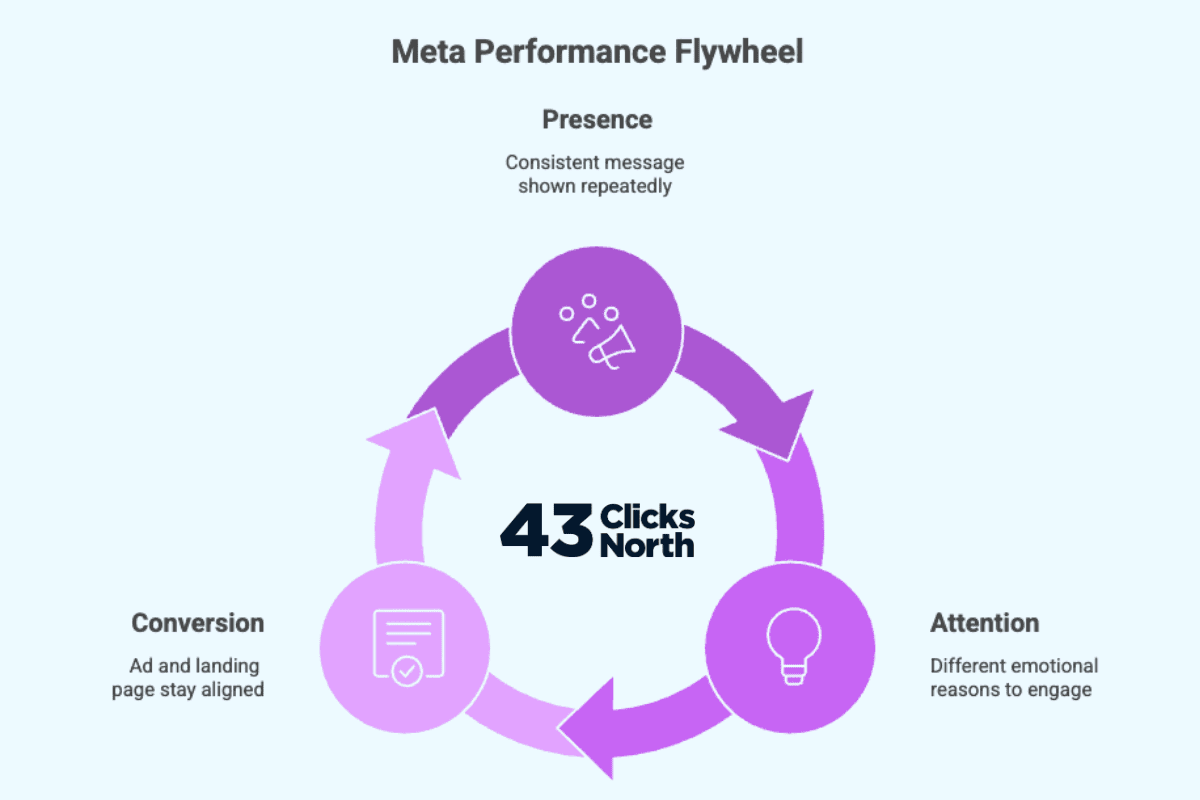
Meta performance stabilises when your account feeds the system consistent, diversified behavioural signals. That happens when three layers work together: Presence, Attention, and Conversion.
If one layer weakens, delivery becomes unstable. If all three reinforce each other, performance becomes predictable.
1. Presence Creates Stable Signal Foundations
Presence is not about reach alone. It is about showing up consistently with a clear message so Meta can identify who engages and why.
Instability begins when:
- Messaging shifts too often
- Emotional themes blur together
- Audience exposure becomes inconsistent
Stability improves when:
- A defined audience repeatedly sees a clear emotional idea
- Engagement patterns form around that idea
- Conversion data confirms those patterns
This gives the algorithm a reliable behavioural anchor.
2. Attention Expands Exploration
Attention is where signal diversity either grows or collapses. If every ad expresses the same emotional promise, the system clusters into a single group. Delivery narrows while frequency rises, and of course, costs increase.
Exploration expands when:
- Each campaign centres on one dominant emotional motivation
- Different motivations are tested deliberately
- Concepts are allowed enough time to generate learnable behaviour
This does not mean more variations. It means more psychological entry points. If motivations differ clearly, Meta forms multiple optimisation clusters rather than relying on a single one.
3. Conversion Confirms and Reinforces Learning
Strong attention without aligned conversion weakens signal quality. If your landing page shifts tone, introduces friction, or contradicts the ad’s promise, behaviour becomes inconsistent. The system receives mixed feedback.
Stability improves when:
- The emotional message continues from ad to page
- The value proposition remains consistent
- The decision process feels coherent
Clean post-click behaviour strengthens clustering and reduces volatility.
Key Takeaways
Meta ads lose effectiveness when engagement becomes narrow because it provides the system with fewer signals to learn from. As the system learns from a smaller group of people, delivery concentration increases, frequency rises, and costs increase, even though your campaigns appear unchanged.
This often happens when most of your budget depends on one main message, which limits learning to a single type of response.
Stability returns when you test different clear motivations, spread the budget across them, and give each one time to gather real interaction data.
Stopped growing online?
We know how to fix that.
We start with your data, not your channels.
Commercial, market, performance, customer and behavioural data, woven into one view rather than five separate reports.
It shows where your profit comes from, which activities earn their place, which are dead weight, and what's worth doing next.
We typically find 15-30% in wasted marketing spend in the first 3 months.
Channels are the tools; making your business more money is the objective.
Latest News
See all
5 Conversion Blockers That Hurt Black Friday Sales
Shoppers are ready to buy this season, but site blockers can send them to competitors. Discover 5 mistakes to avoid and how to fix them.


5 Strategies to Boost Ecommerce Landing Page Conversions
Your ecommerce landing page is critical in the success of your online store. Join 43 Clicks North as we share our tips on boosting your conversion rates.

How building/nurturing communities can benefit your brand
One of the most enigmatic marketing strategies, has always been communities. Find out how building & nurturing communities can benefit your brand with 43CN.